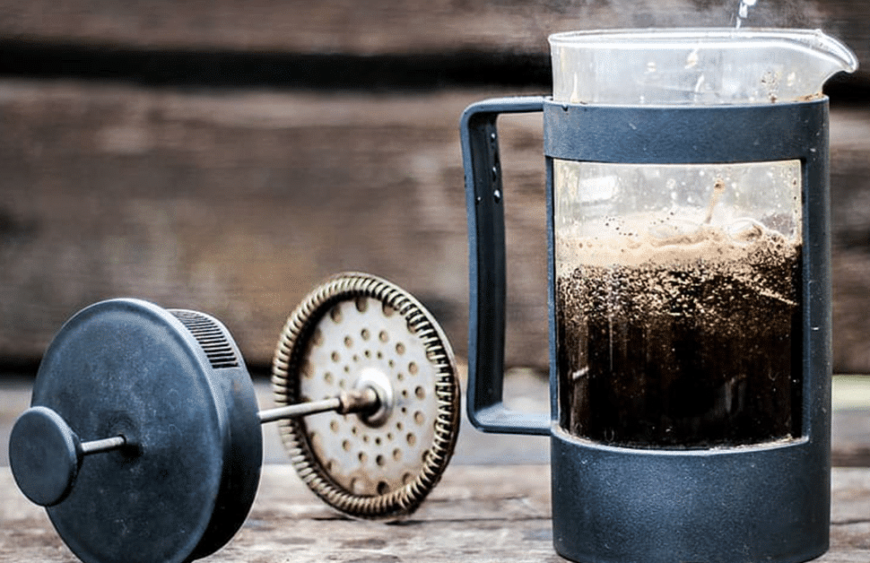
If there’s one method of preparing coffee that you’ll find in almost every other household in the country, it’s French press. Often it is this “pot with a plunger” that serves as the gateway to the world of Specialty coffee.
However, many underestimate it or use it incorrectly. The French press offers something that fine paper filters cannot – a massive body and full texture. Because the coffee is brewed in water the entire time and the metal strainer also lets the coffee oils through, you get a really intense experience in your cup. Whether you’re in the city in a rush before work or enjoying a slow weekend morning at the cottage, the French press is a reliable partner.
Short history: French name, Italian patent
Although the name “French press” clearly refers to France, its origin is not so straightforward. Although the first references to making coffee by pressing a plunger through a filter appeared in France in the mid-19th century, these devices leaked and the coffee was full of sediment.
Ironically, the design of the French press as we know it today was patented by an Italian. It was Milanese designer Attilio Calimani in 1929 who perfected the piston seal. Since then, this iconic design has hardly changed and has become the worldwide standard for easy home coffee making.
The expert’s view
Why should you give the French press a chance even if you’re a V60 fan? The answer is Šimon Janík, Slovak Barista Champion, who covers B2B relations and sales at Goriffee:
“French press is often unfairly relegated to the back burner, but for me it’s the king of full-bodied taste. Unlike the V60, where the paper filter catches most of the oils and sediment, the French press lets them into the cup. The result is a coffee that has a heavier, creamier body and a longer aftertaste. It’s the ideal method for people who are switching from classic ‘turko’ to Specialty coffee and are looking for something flavourful, but without the grit between the teeth. The key to success, however, is a good grinder – you need a consistently coarse grind, otherwise the coffee will be bitter and cloudy.”
Recommended recipe for French press
Forget about a quick squeeze after watering. The secret to a clean French press is patience and picking up the foam.
- Coffee: 30 g (freshly roasted specialty coffee)
- Water: 500 ml (soft, filtered)
- Water temperature: 98 °C (just after clamping)
- Grinding: very coarse (consistency like coarse sea salt)
- Total time: 4 – 8 minutes
Procedure:
- Warming up: rinse the French press with hot water to warm up the glass. Pour out the water.
- Watering: Pour in 30 g coarsely ground coffee. Pour in a full volume of water (500 ml). Make sure all the coffee is soaked.
- Waiting: let the coffee infuse for 4 minutes. Do not do anything with it yet, leave the plunger on the side.
- Breaking the crust: after 4 minutes, a “crust” of coffee grounds forms on the surface. Take a spoon and stir the crust. Most of the coffee will begin to sink to the bottom.
- Cleaning: foam and a few floating particles remain on the surface. For a cleaner taste, scoop them up with a spoon and dispose of them in the sink.
- Pressing (or rather filtering): put on the piston. Now you have two options. Either you press the plunger all the way down (slowly!), or you press it just below the surface of the coffee to serve only as a strainer when pouring. The second option will guarantee less sludge in the cup.
- Serving: immediately pour the coffee into cups or other containers so that it does not leach further.
A little tip for the end: do not drink filtered coffee immediately after its preparation, wait about 2-3 minutes for it to cool down slightly. It has the most developed flavours at about 70-60 degrees.
Serve the coffee immediately after preparation, don’t leave it in the French press “in the dark”. If you do not separate the coffee from the water, extraction will still take place, which can lead to an unpleasant taste. Hello 🙂
Frequently Asked Questions (FAQ)
1. Why is my French press coffee full of “mud” and sediment? The problem is usually in the grinder. Cheap burr grinders chop the coffee unevenly – creating both large chunks and fine dust. It’s that fine dust that passes through the metal strainer and forms a sludge at the bottom of the cup. The solution is a quality grinder with grinding stones and a coarse grind setting.
2. How long can I leave the coffee in the French press after pressing? You should pour the coffee immediately after squeezing. As long as the water is in contact with the ground beans (even if they are squeezed at the bottom), extraction is still taking place. If you leave it in there for 10 minutes, the coffee will be bitter and over-extracted.
3. Can I make tea in French press? Technically yes, but we don’t recommend doing it in the same container you make the coffee in. Coffee oils settle on the strainer and glass and are very difficult to wash off completely. Your fine green tea could thus have the aftertaste of old coffee.
4. Is the French press also suitable for light roast coffee? Definitely yes. Although it is often associated with darker roasts, a selection of light roast specialty coffee stands out beautifully in a French press. You’ll get a sweet, full-bodied cup that will be different from the V60, but still delicious. For lighter roasts, we recommend using boiling water and a longer leaching time.
5. How to care for French press? It must be disassembled after each use. It is not enough to rinse it. Scrape the strainer off the plunger, as it is between these metal parts that old oils build up, turning yellow over time and spoiling the taste of each subsequent coffee.