
What’s it all about when you say batch brew: The return of a legend and the battle of the coffee makers (2026)
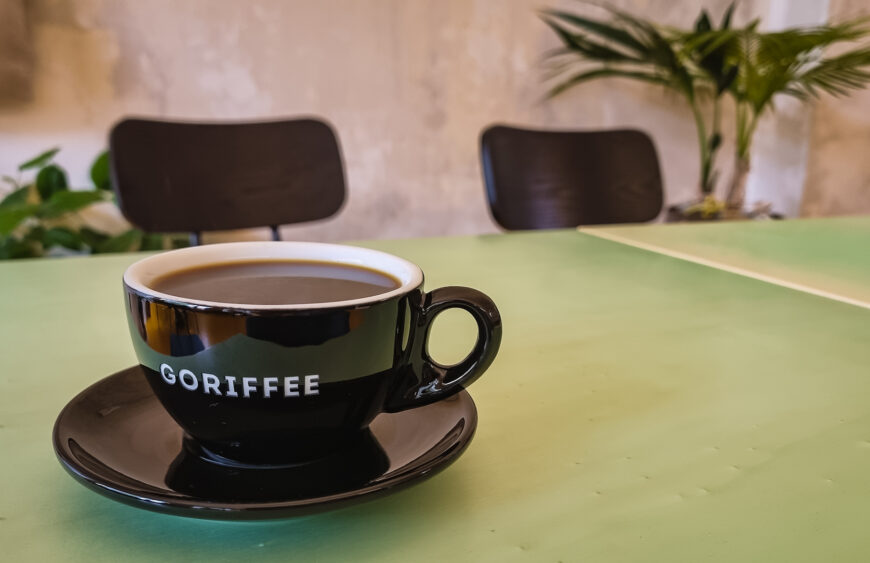
In the context of the current coffee market, we are witnessing a fascinating phenomenon – the “rehabilitation of the surprise coffee drinker”. While the third coffee wave was initially defined by manual brew methods such as V60, Chemex or Aeropress, which emphasised the craftsmanship of the barista, recent years have brought a massive return to automation under the banner of batch brew.
It’s not a new concept – regular coffee has been with us for decades. What has changed is not the principle of gravity and filtration, but the precision with which modern instruments control these physical processes. Forget the burnt coffee of the 90s that stood for hours on a hot plate. Today’s batch brew is all about technological precision, bringing a quality to the cup that’s comparable to manual brewing, but with the convenience of a single button press.
Where it all started: From notebook drinker to revolution
To understand today, we need to go back to the beginning of the 20th century. The story of filter coffee is not the work of a barista in a tattoo parlour, but of a frustrated German housewife.
The year was 1908. Melitta Bentz, a 35-year-old housewife from Dresden, was fed up with coffee. It was prepared in percolators, which often overcooked the coffee, and there was always an unpleasant residue at the bottom of the cup. Melitta was looking for a way to get a cleaner taste.
In a burst of creativity, she took a brass mug, punched holes in it with nails and – here comes the genius moment – lined it with suction paper (a drink) torn from her son’s school notebook. The result? The coffee was clean, free of sediment and devoid of excessive bitterness. This patent laid the foundations for today’s “pour-over” method and the Melitta brand.
Electrification came later. In 1954, the German Wigomat introduced the world’s first electric surprising machine. However, the key breakthrough came in 1968, when the Dutchman Gerard Clement Smit developed the Moccamaster. His aim was not just to pour water over coffee, but to do it at a scientifically based temperature of 92-96°C. And this is where the history of the modern batch brew begins to be written.
Semantics: batch brew vs. dripper
On the subject of filter coffee, we often encounter a language barrier. On the one hand, there is the modern term “batch brew”, which is synonymous with quality and specialty coffee in cafés. On the other side is the traditional Slovak term ‘prekvapkávač’, which many associate with cheap plastic machines and bitter liquid of unclear origin.
It is important to say that technically it is the same thing. Batch brew, however, is a modern, technically perfect iteration of regular coffee. Whereas the old machines “boiled” and poured the water in one place, the new machines simulate the work of a barista.
Technological anatomy: What distinguishes a good machine from a bad one?
Why does coffee from a regular supermarket coffee machine taste different than from a professional machine? The difference lies in the so-called “four T’s” of extraction (Time, Temperature, Turbulence, TDS). Most cheap machines fail on two key parameters: temperature and water distribution.
1. Thermodynamics of water heating
This is the biggest difference between a high-end machine (e.g. Moccamaster) and an ordinary appliance.
- Inexpensive machines: they use aluminium thermoblocks or simple spirals that work by impact. The water often boils (100 °C) and spurts on the coffee in the form of steam, which burns it. The temperature then drops below 85 °C, leading to poor extraction and a sour taste.
- Premium machines (SCA Certified): use solid copper heating elements or PID systems. They allow water to be heated to a precise 92-96°C in seconds and keep this temperature constant. It is within this range that the coffee releases the best spectrum of tastes.
2. Hydrodynamics and water distribution
The second critical factor is how the water gets to the coffee bed.
- Point distribution: cheap machines often have only one nozzle in the centre. The water digs a “crater” in the middle of the ground coffee (called channeling). The centre is over-extracted and bitter, while the coffee at the edges remains dry.
- Showerheads: quality machines use showerheads that spread the water evenly over the entire surface, much like a barista pouring by hand.
The big test: the Moccamaster vs. Melitta vs. Fellow
If you’re looking for a top-of-the-line home machine today, the market offers three distinct philosophies. We’ve juxtaposed an immortal classic, a practical “all-in-one” machine and the latest technological scream.
1. Technivorm Moccamaster KBG Select
A legend that never grows old.
This Dutch machine is to the coffee world what the Porsche 911 is to the automotive world. The design has hardly changed since the 1960s and is still assembled by hand today.
- Who it’s for: For purists who want a machine for life and love simplicity.
- Why want it: It has a copper heating element and a modular design – almost every component can be replaced. The Select model has a half-batch switch, which slows the water flow for better extraction of smaller amounts.
- Con: It’s an “analog” machine. It doesn’t have a grinder or a timer.
2. Melitta AromaFresh (with grinder)
Bean-to-Cup convenience.
Melitta has chosen the path of maximum comfort here. The AromaFresh has an integrated grinder, so you pour the beans into the machine and don’t worry about anything else.
- Who it’s for: For pragmatists who don’t want to deal with a scale or an external grinder in the morning and want fresh coffee at the touch of a button.
- Why you want it: Integrated ceramic grinder, timer (wake up to the smell of coffee) and removable water reservoir. It’s a great “entry” machine into the world of fresh coffee.
- Disadvantage: The grinder is noisier and cleaning is more difficult.
3. Fellow Aiden
The future is here.
The latest addition to the market that has caused a stir. Aiden promises to have solved all the batch brew problems. It offers the precision that only baristas with a kettle in hand have had until now.
- Who it’s for: For “coffee geeks” and those who want to make From the specialty coffee selection to the filter to get the absolute maximum without compromise.
- Why want it: Incredible control (temperature setting to the degree precisely, profiles for light/dark roasting). It has two interchangeable baskets – one for large batches, the other specially designed for single serve, which is revolutionary in batch brew.
- Disadvantage: Higher price and more complex operation for the average user.
A quick comparison of the specifications of the tested Batch brewers
| Parameter | Moccamaster KBG Select | Melitta AromaFresh | Fellow Aiden |
| Main philosophy | Durability and simplicity | All in one (grinder) | Technological precision |
| The Grinder | No | Yes (integrated) | No |
| Heating system | Copper body (still) | Standard thermoblock | PID (precision control) |
| Temperature setting | No (fixed 92 – 96 °C) | No | Yes (to the degree exactly) |
| Single-cup (1 cup) | No (min. 500 ml for quality) | Yes | Yes (has a special basket) |
| Timer | No | Yes | Yes |
| Price (indicative) | ~270 € | ~260€ | ~380€ |
Preparation methodology: the science of extraction in the home environment
Having a good machine is only half the battle. The other half is the right recipe. The coffee machine is just a tool, the result is in your hands.
1. Golden section: Coffee to water ratio
Most baristas and institutions (SCA) agree on a ratio of 60 grams of coffee to 1 litre of water.
- To prepare 500 ml, use 30 g of coffee.
- This ratio provides an ideal balance between strength and extraction.
2. Grinding coarseness
This is the most common mistake in households. For a batch brew it is necessary to grind the coffee medium coarsely, resembling the consistency of coarser sea salt or crystal sugar.
- The grind must be coarser than on the V60, but finer than on the French Press.
3. Water
Coffee is 99% water. Tap water often contains chlorine, which kills the taste of coffee. We recommend using filter kettles (e.g. BWT with magnesium) or bottled water with low mineralisation. Why the composition of water is key and how it affects the taste, we have discussed in detail in a separate article on water treatment in the home environment
Step by step: recipe for the perfect Batch Brew (Moccamaster style)
Note: If you own Fellow Aiden, it does this process automatically. For Moccamaster and other machines, we recommend this procedure:
- Preparation: insert the paper filter (size 4) into the holder. Critical step: rinse the filter with hot water! This will remove the paper aftertaste and warm the carafe. Pour the water out of the carafe.
- Dosage: Pour 60 g of ground coffee into a wet filter. Gently shake the holder to align the coffee.
- Start and Bloom: switch on the coffee machine. Watch the water coming out of the shower. When the coffee in the filter is completely steeped (after about 30 – 40 seconds), turn off the machine (or close the flow on the basket).
- Stirring: during this pause, take a spoon and gently stir the wet coffee. This will ensure that no dry lumps remain. Allow the coffee to “bloom” for about 30 seconds.
- Extraction: switch on the coffee machine again and let the process finish. The total time should be around 5 to 6 minutes.
- Finale: Remove the carafe after steeping and stir the coffee in it in a circular motion or with a spoon. The coffee on the bottom is stronger than the one on the top – stirring will unify the taste.
Troubleshooting: when it doesn’t taste the way it should
Even with the best machine, the result may not be ideal. Here is a quick help:
| The problem in the cup | Probable cause | Solution |
| The coffee is hot, bitter, dry | Re-extracting | The coffee was ground too finely. Try a coarser grind. |
| Coffee is sour, salty, watery | Under-extraction | The coffee was ground too coarsely or the water overflowed too quickly. Try a finer grind. |
| Coffee has a taste that is ‘paper’ | Poor filter preparation | You forgot to rinse the paper filter with hot water before pouring the coffee. |
| The coffee smells / is stale | Dirty machine | Settled coffee oils in the machine turn yellow. Clean and descale the machine regularly. |
Recommended specialty coffee selections for batch brew
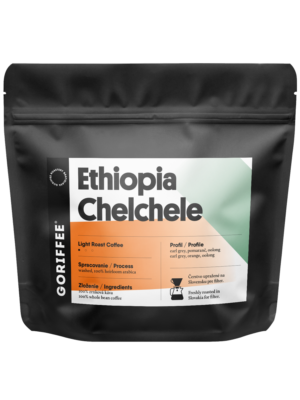
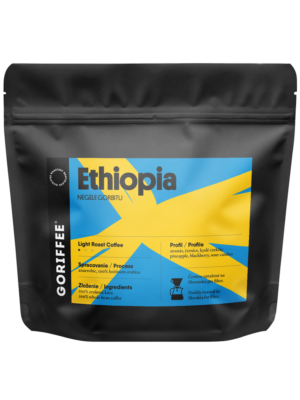
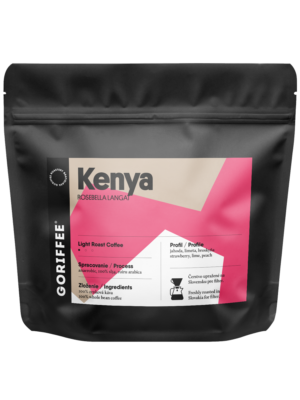
Not even the best coffee machine in the world can save poor quality raw material. For a batch brew, we recommend pouring beans that are roasted lighter and have a clean flavour profile so that their subtle nuances are not lost in the large volume.

Ethiopia Chelchele Washed
16,00 € – 62,00 €Ethiopia Negele Gorbitu
17,00 € – 66,00 €Kenya Rosebella Natural
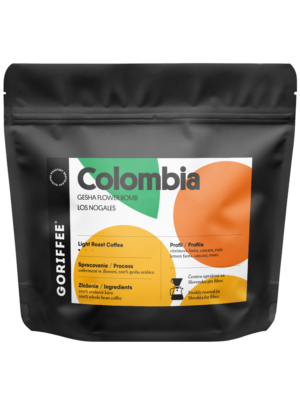
17,00 € – 66,00 €Colombia Gesha Flower Bomb
16,00 € – 104,00 €
Conclusion
Batch brew is proof that convenience and quality don’t have to be mutually exclusive. Whether you choose the legendary Moccamaster for its immortality, reach for Melitta’s convenient all-in-one solution, or invest in a high-tech Fellow Aiden, your investment in a quality machine will pay you back every morning. You’ll save time and enjoy your specialty coffee in its full glory – without standing over the scale and the kettle.