Sensory analysis of coffee for beginners – how to identify acidity, body and aftertaste in a cup
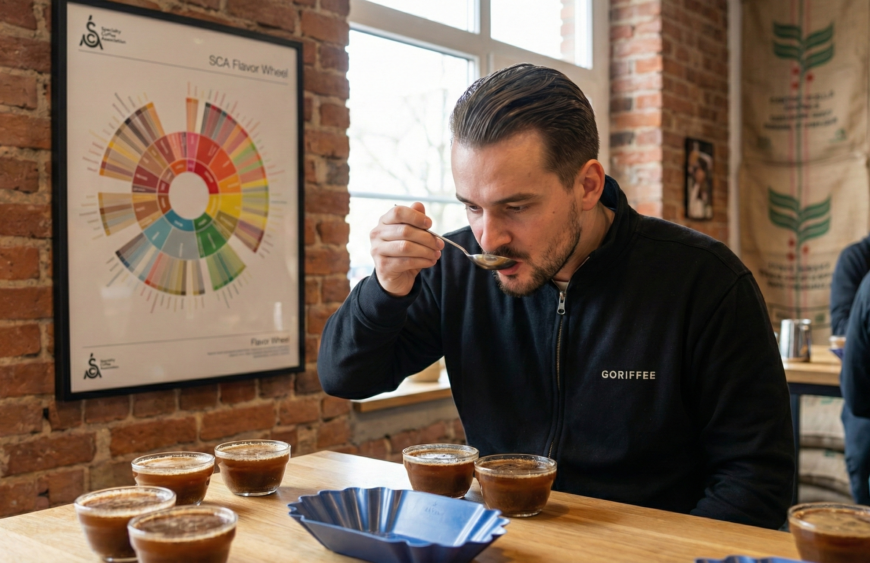
Drinking coffee is an essential morning ritual for most of us, but the world defined by Specialty coffee offers much more than just a quick caffeine fix. Sensory analysis – that is, the ability to consciously identify tastes, aromas and textures – is not the preserve of professionals at the world’s competitions. It’s a practical tool for any coffee lover who wants to truly understand the quality in a cup and not be swayed by pretty packaging when making a purchase.
In the following lines, we will teach you how to turn ordinary drinking into conscious tasting. Understanding the basic pillars of acidity, body and taste will allow you to name exactly why you like a particular bean and make it easier for you to choose your next favourite coffee.
Why start with conscious tasting
Most people perceive coffee as one homogeneous drink with a taste “like coffee”. However, specialty coffee carries the genetic code of the country of origin, the processing methods and the work of the roaster. Training your senses will give you three basic benefits:
- Better choice when buying: when you know you prefer sparkly apple acidity over dense chocolate body, you can target specific regions, for example high mountain Kenya instead of Brazil.
- Optimising home brewing: if you feel an unpleasant bitterness in your cup, sensory analysis tells you that you need a coarser grind or a lower water temperature.
- The ability to identify freshness: you learn to distinguish between the complex aftertaste of a freshly roasted bean and the empty, earthy taste of coffee that has spent too much time on the supermarket shelf.
Preparation for sensory training
Before diving into acidity or body analysis, it is important to follow a few technical principles to ensure the objectivity of your perceptions:
- Water purity: as coffee is 98% water, use only filtered water with low mineral content. Hard water can completely “kill” the delicate acidity of even the best roasted beans.
- Temperature of the cup: never evaluate the coffee immediately after pouring. Our taste receptors perceive the most detail at a temperature of around 50-60 °C. As the coffee cools, its chemical composition changes and the flavour profile becomes clearer.
- Do not use sugar or milk: Any additive changes the body structure and masks the natural acidity of the grain. Sensory analysis requires a pure black beverage.
Acidity – the spark you look for in coffee
In common parlance, acidity is often confused with unpleasant acidity. In commodity coffee, acidity is the result of defective, immature beans or overly dark roasting that masks poor quality. However, in the world of specialty coffee, acidity is a desirable attribute that adds life, brightness and complexity to the beverage .
- How to identify it: Concentrate on the places where you perceive the taste of apple or lemon – that is, the sides of your tongue and the front of your mouth. Quality acidity is clean and refreshing.
- Types of acidity: in coffee we distinguish mainly organic acids. Citric adds freshness, malic brings juiciness, phosphoric is responsible for the sparkling sensation typical of Kenyan coffee and lactic acid reduces the sharpness of other acids and contributes to the overall sweetness and complexity.
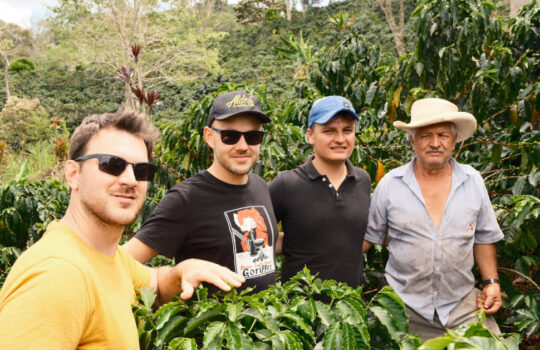
- Origin and processing: High mountain conditions slow the ripening of coffee cherries, which concentrates the acids in the bean. Examples of this are the clear flavor profiles that Amir and Jacob sought during Amir and Amir were looking for during their selection trip in Kenya..
For a deeper technical understanding , we recommend studying the World Coffee Research Sensory Lexicon, the world standard for flavor descriptors.
Body – the texture you feel on the palate
The body (body) is not a taste component, but a tactile sensation. It describes the viscosity, weight and texture of the liquid in the mouth . It is formed by combining coffee oils and microparticles released into the water during the extraction process.
- Sensory exercise: try to “roll” the coffee around in your mouth like wine. Does it feel like light water, or is it more like syrup or cream?
- Body Scale:
- Light: Clean, reminiscent of tea. Typical of light roasting and the method .
- Smooth (creamy): texture of semi-skimmed milk, chocolate notes.
- Full-bodied (heavy): viscosity of syrup, especially pronounced in espresso preparation.
- Factors affecting the body: The grinding method and preparation method play a key role. While the filter traps the oils, the metal strainer lets them through, increasing the perceived denseness.
Aftertaste – the signature that the coffee leaves
Aftertaste are the sensations that remain in the mouth after swallowing. It is a critical indicator of quality because it is the aftertaste that determines whether you have a taste for another cup .
- Length of aftertaste: a quality coffee should have a lingering aftertaste that changes over time. If the taste disappears immediately, the coffee is flat. If an unpleasant bitterness remains, we are talking about a defect.
- Clean cup: a technical term that defines the absolute cleanliness of a cup, free from distractions from the first sip until it has cooled completely. It is only achieved by precise processing on the farm and in the roasting plant.
Practical exercise with the SCA taste wheel
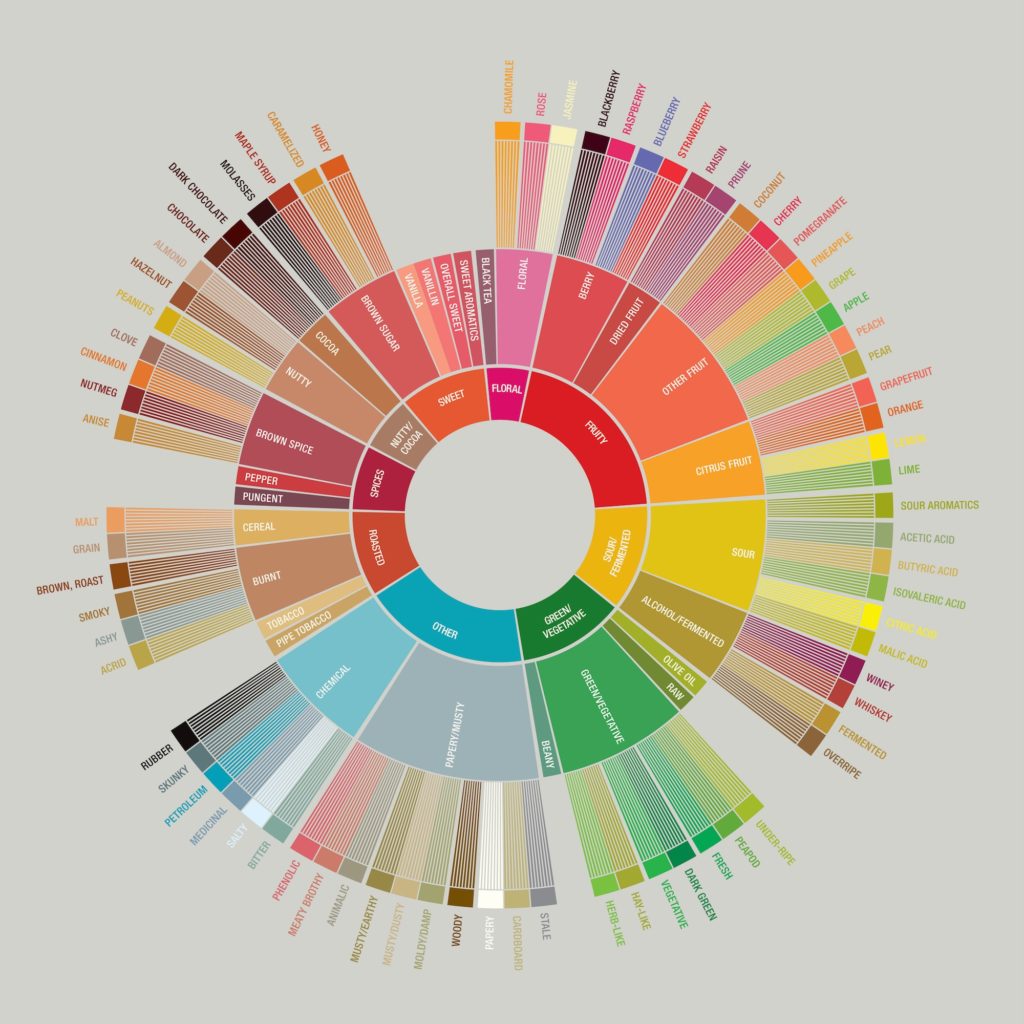
The Taste Wheel, developed by the Specialty Coffee Association (SCA), is a scientific code for the sensory evaluation of coffee. It helps to link abstract taste sensations to objective terminology, which is essential for proper calibration of your palate.
How to use the wheel properly: Using the wheel is intuitive and based on a general to specific approach. When tasting , always start at the very centre of the wheel, where the most general tastes (e.g. fruity, sweet, floral or nutty) are found.
Once you have established a basic direction, work towards the outer edges of the wheel. Each additional ring brings more specific descriptors. For example, if you have identified a “fruity” taste in the center, the next step will tell you if it is “berry fruit” or “dried fruit.” At the very edge of the wheel, you can already accurately name a specific note, such as “blackberry,” “blueberry,” or “raisin.” This process allows you to go from a simple “I like it” feeling to a professional description of your cup’s taste profile.
- Objectification of experience: Allows you to move from descriptions like “it’s good” to terms like “apple acidity” or “dark chocolate aftertaste”.
- Memory training: By repeatedly using the wheel, you build mental associations with specific flavor profiles, making it easier for you to make future coffee purchases according to your preferences.
Frequently asked questions about coffee tasting
Why does coffee get bitter on cooling? In fact, coffee doesn’t get bitter, but our taste buds are more sensitive to different taste components, including acidity and bitterness, at lower temperatures. With a hot drink, temperature and body perception dominate.
What if I don’t smell any fruit in my coffee? This can be caused by hard water, which neutralizes the acids, or by an incorrect grinding ratio. Try refining the grind to increase taste extraction.
Does decaffeinated coffee taste different? Using cutting-edge technology as the aromatic oils and body structure are preserved, so you won’t notice a difference in the aftertaste.