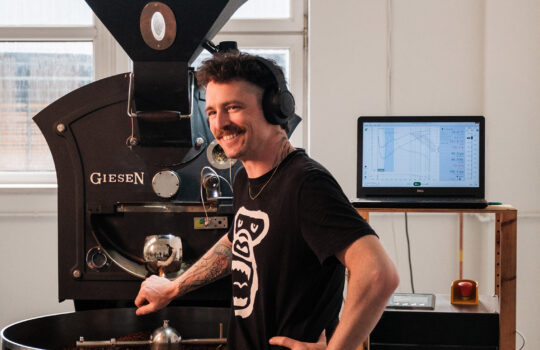
Specialty coffee from Kenya: How Amir and Jacob searched for the best lots of the season directly on the farms
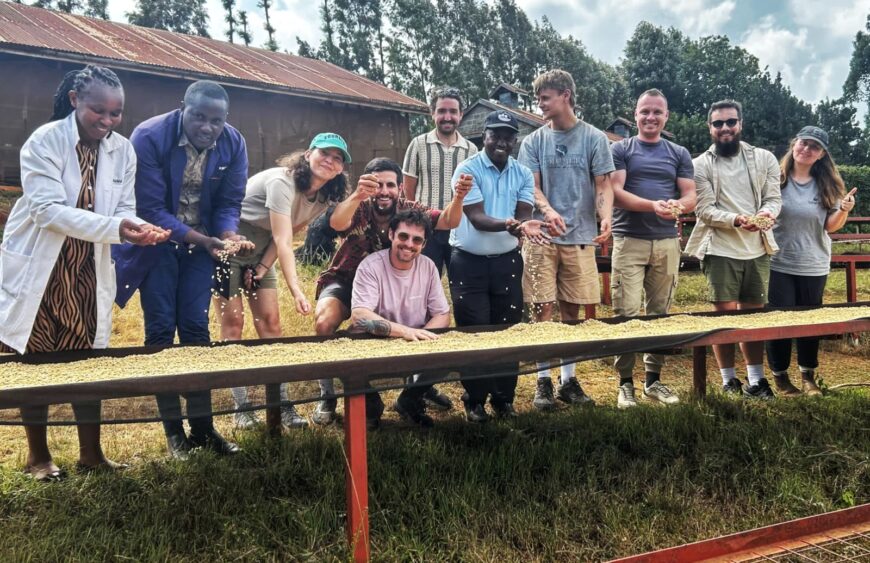
Our roasters Amir and Jakub swapped the roastery environment for Kenyan farms and cupping labs at the end of January. Specialty coffee from Kenya is one of our key origins. That’s why we decided to travel there. Our trip had two goals. To get to know in person the places where the coffees in our range are born, to get to know the farmers in person and most importantly to secure the best lots for the upcoming season at auction well in advance.
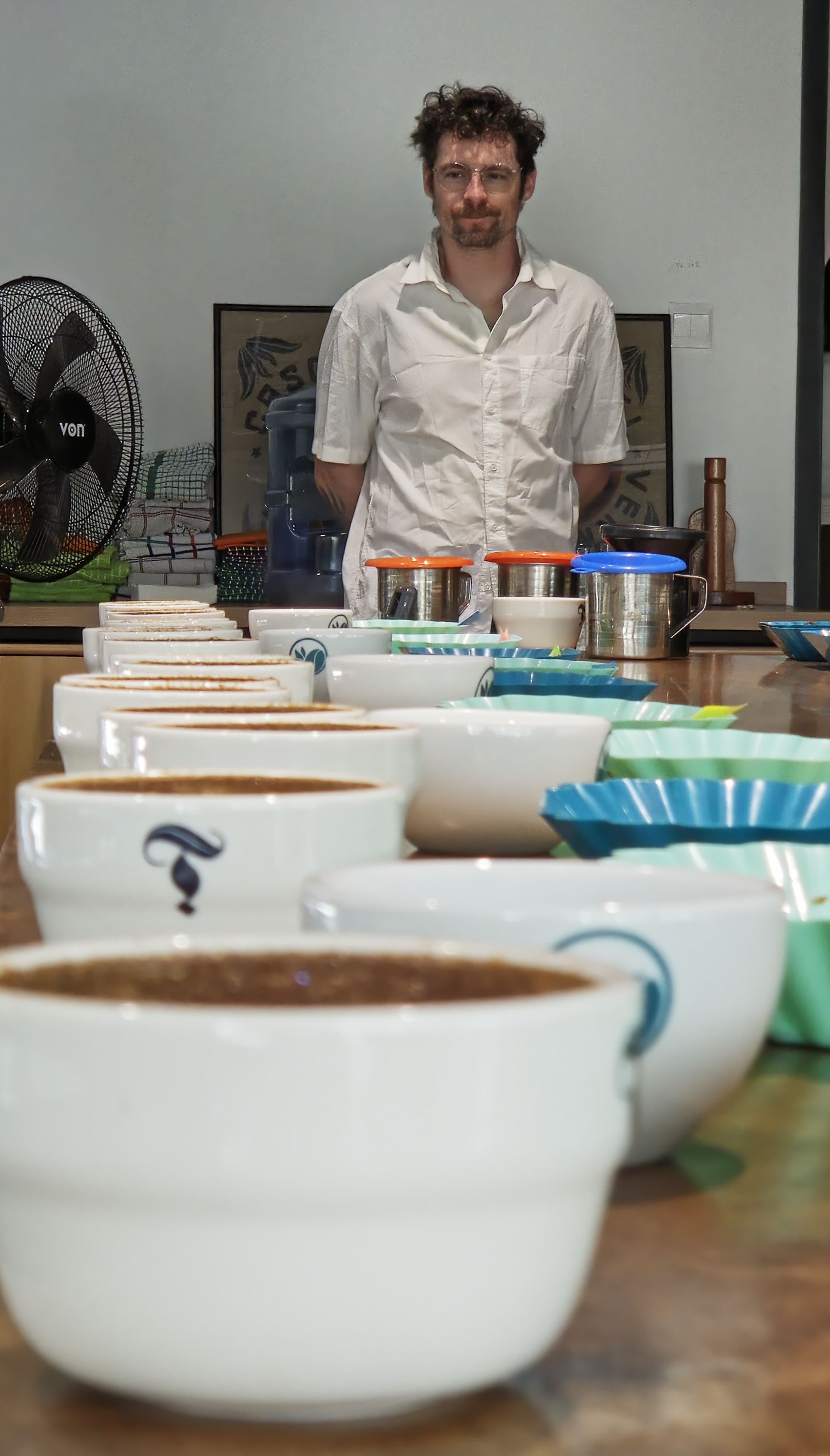
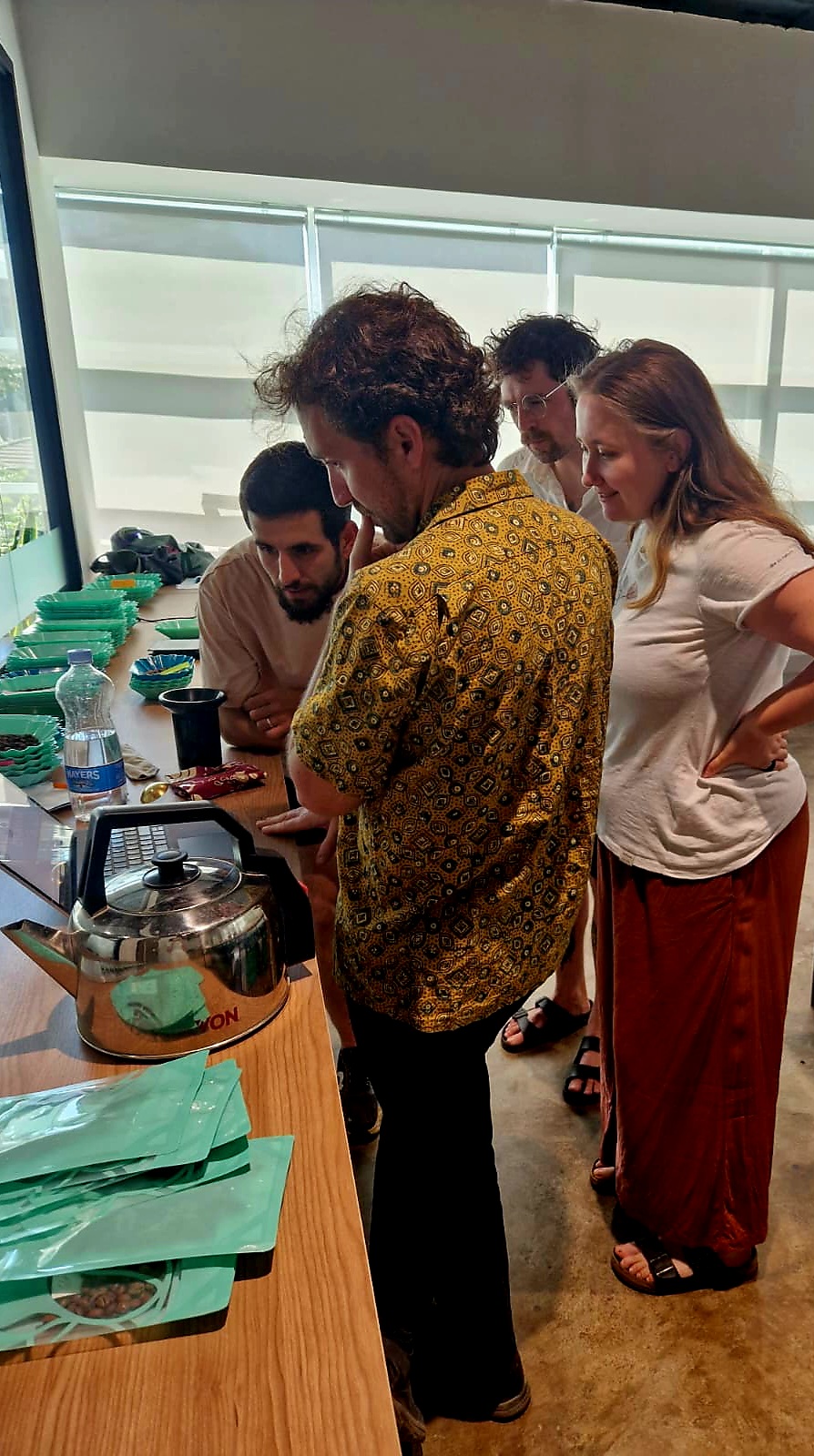
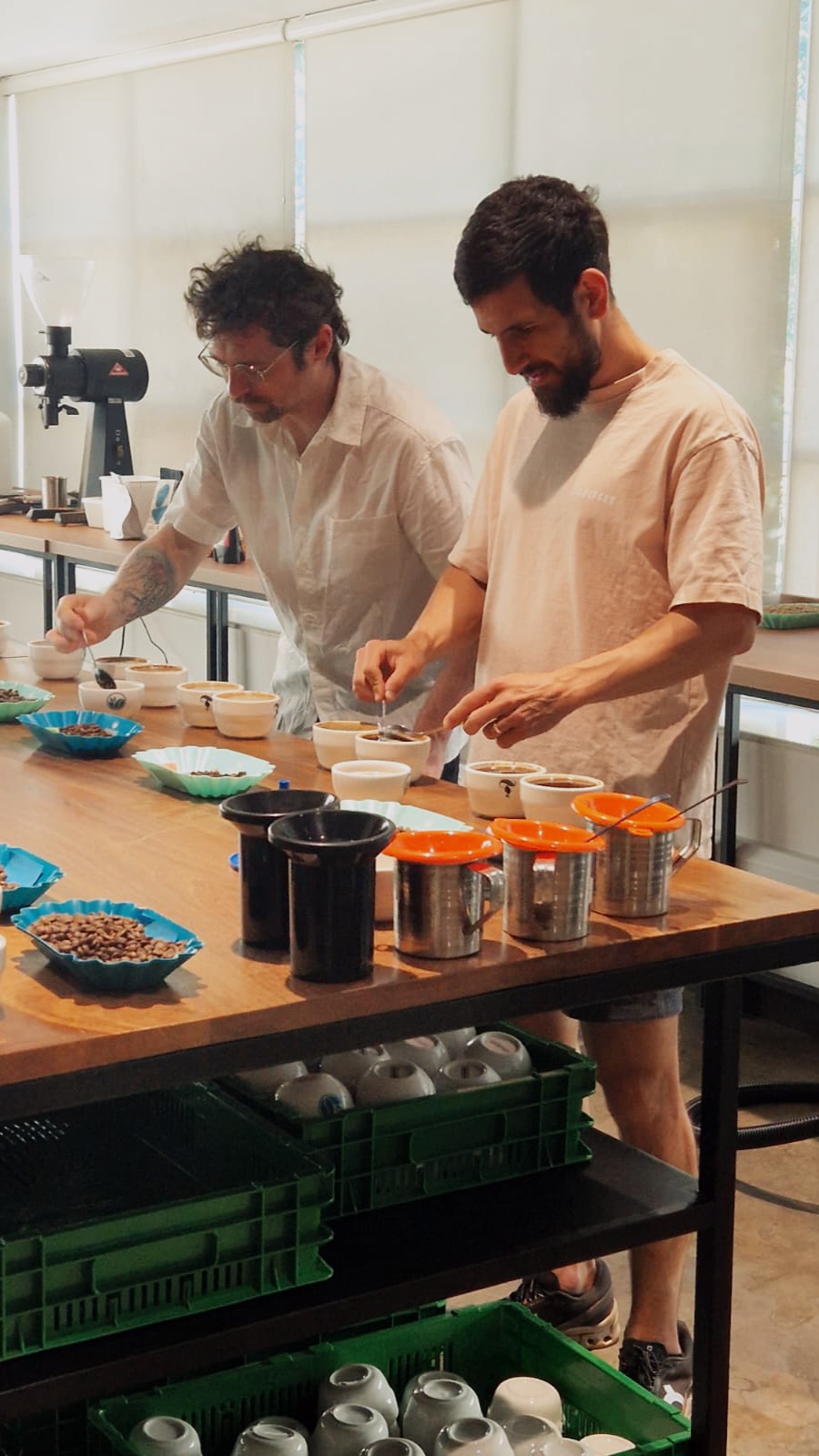
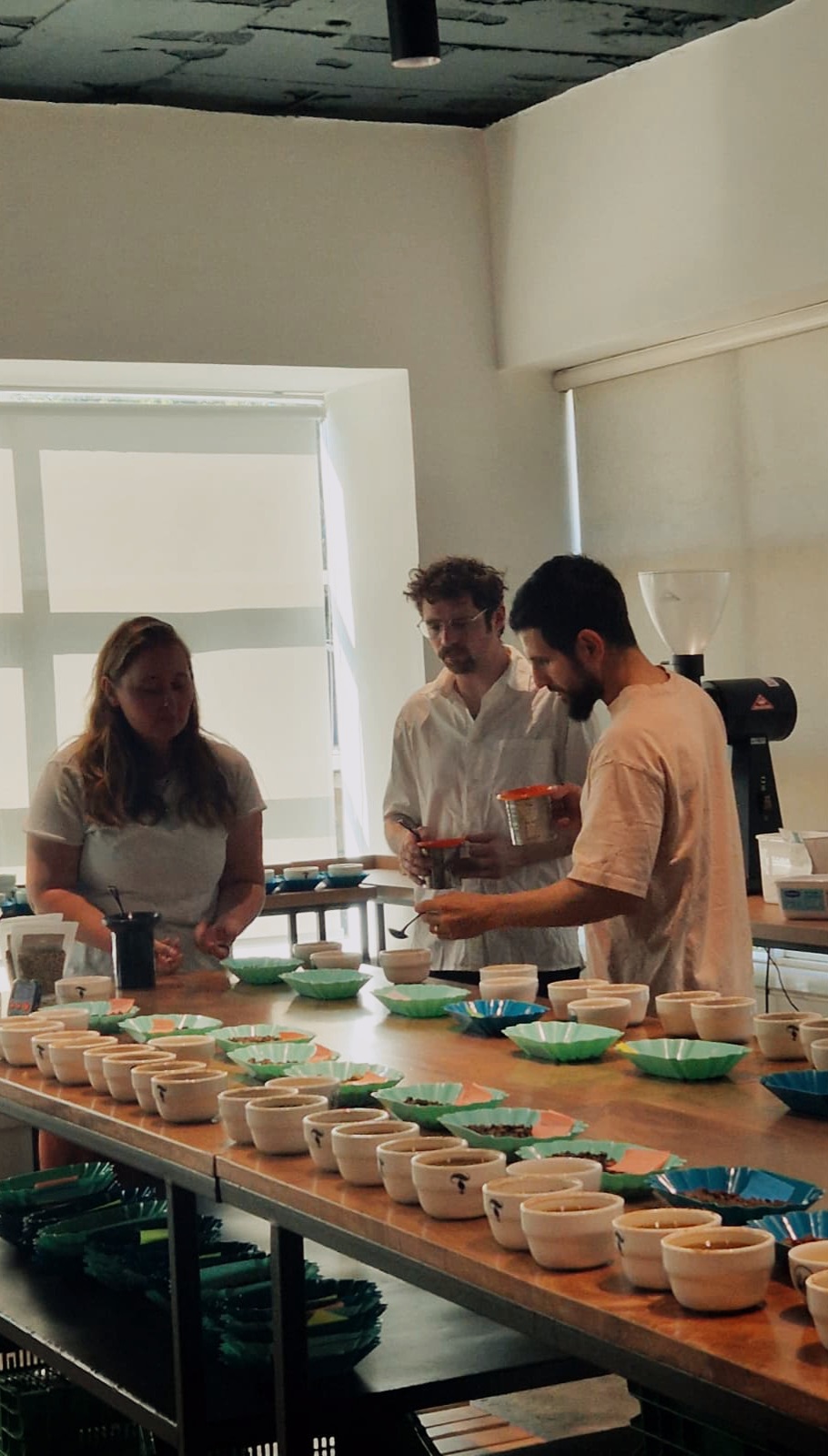
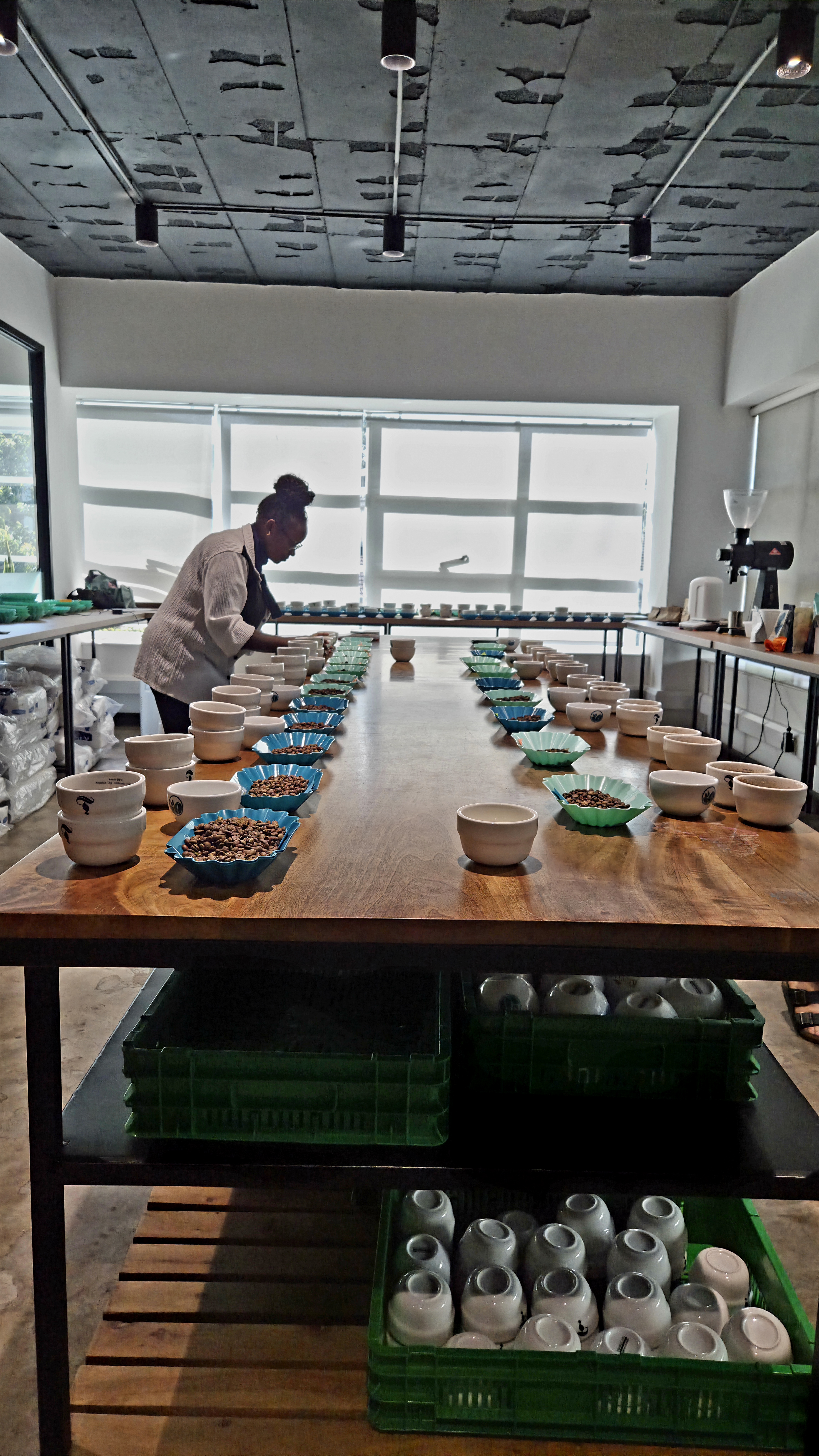
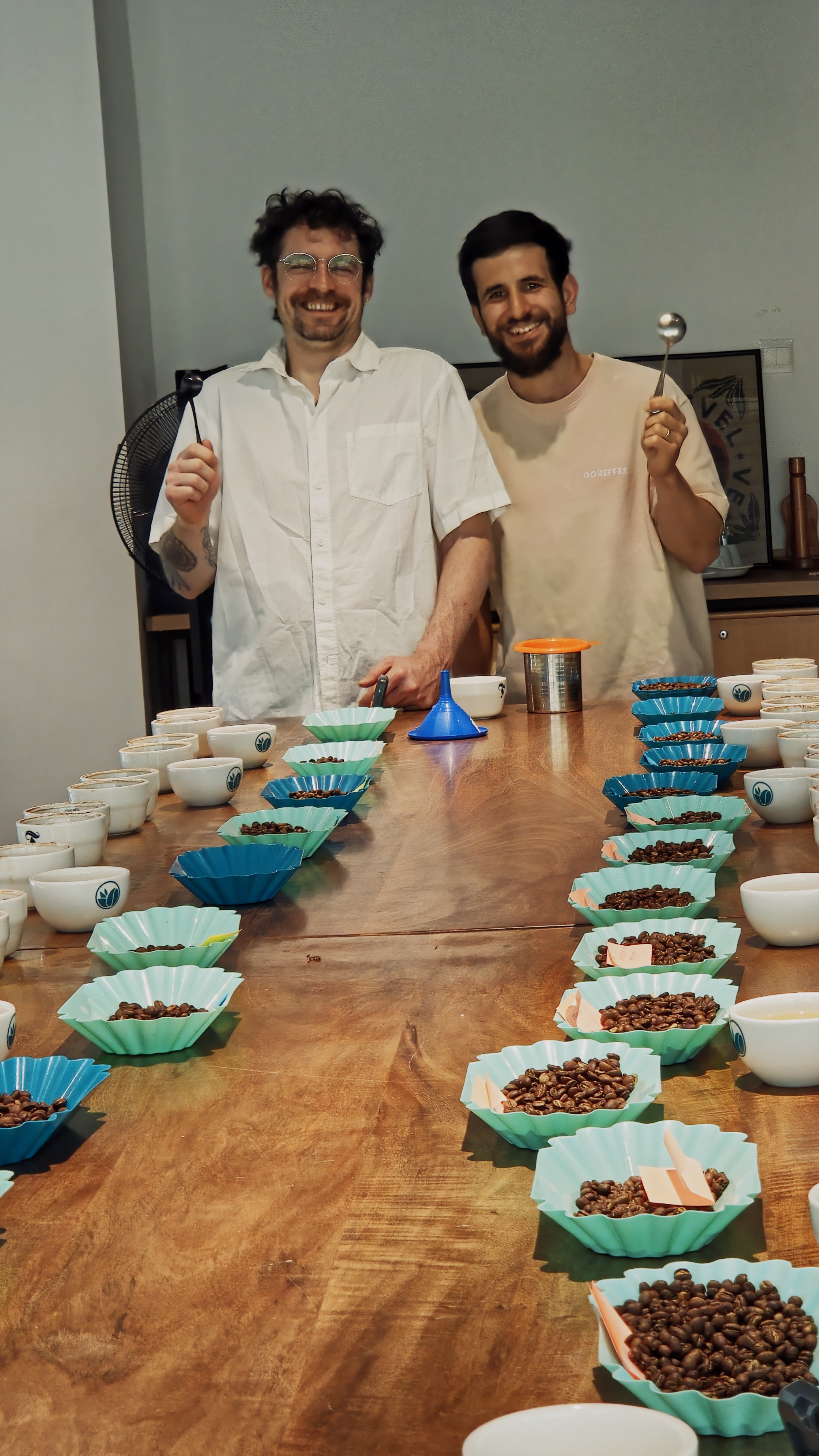
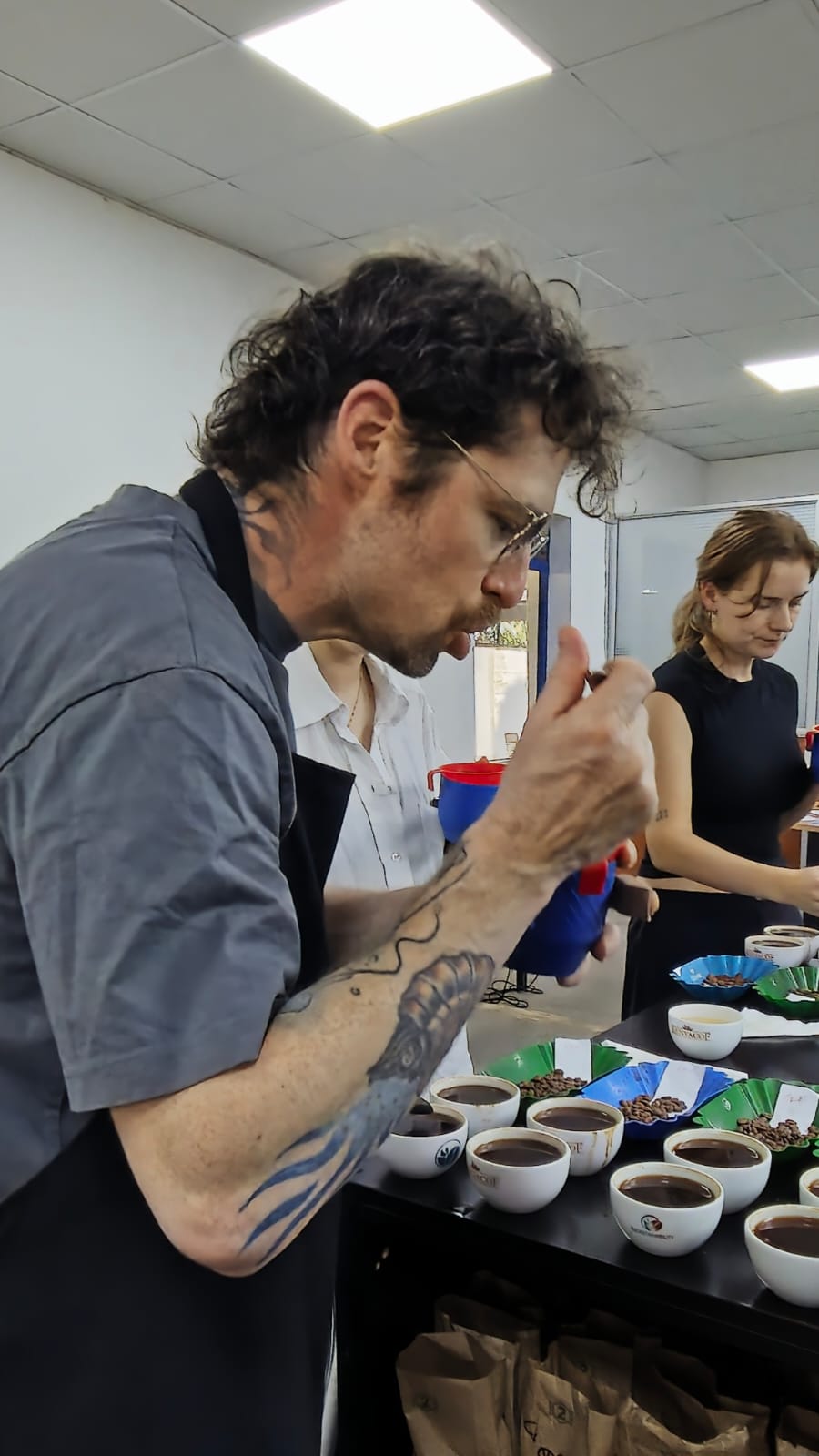
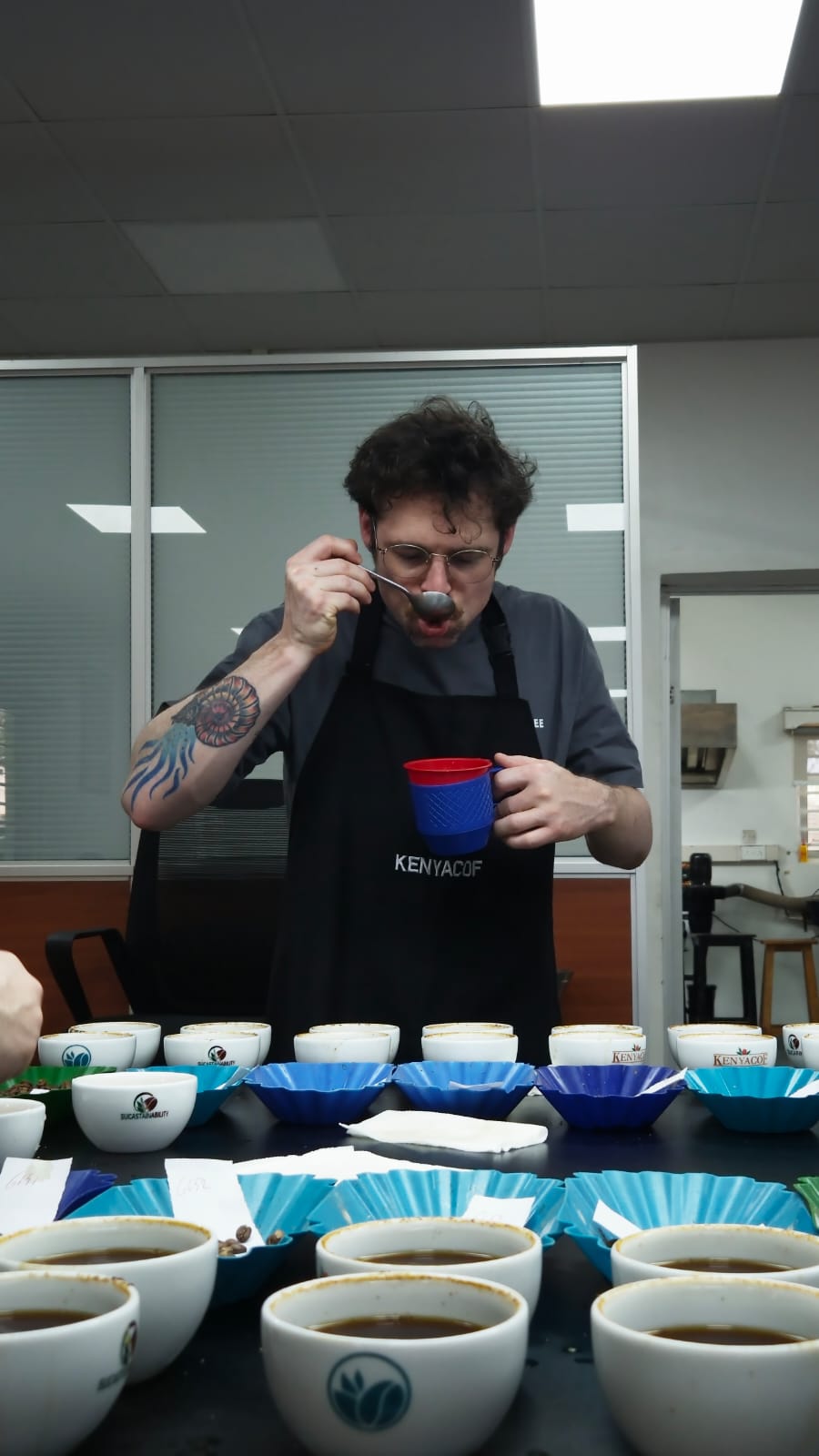
Cupping 300 samples at Sucafina headquarters
Our journey started in Nairobi, at the green coffee warehouse of our partner Sucafina. The first few days were all about maximum focus – we had around 300 coffee samples on the table, which would go to auction the very next day.
In Kenya, the coffee market operates in a very specific way. Up to 88% of the production is sold through a state auction that takes place every Tuesday. In order to bring you the best quality beans, we have to identify and auction them in advance. This is the only way we can guarantee that we miss out on the best lots from the current harvest.
From the lab directly to farms and cooperatives
After intense cupping we moved straight into the field. In Kenya, coffee is more than just a product – it’s about the people. We visited both farms and co-ops to understand the differences in how they operate:
- Farms: They have their own coffee trees and processing stations. Some of them also grow tea alongside coffee, as Kenya is one of the world’s largest producers of tea.
- Co-operatives: they bring together thousands of small farmers from whom they buy coffee cherries and then process them in their stations.
Personal contact with growers is key for us. When we know who is behind the coffee and the conditions in which it is grown, we can tell its story in a much more authentic way.
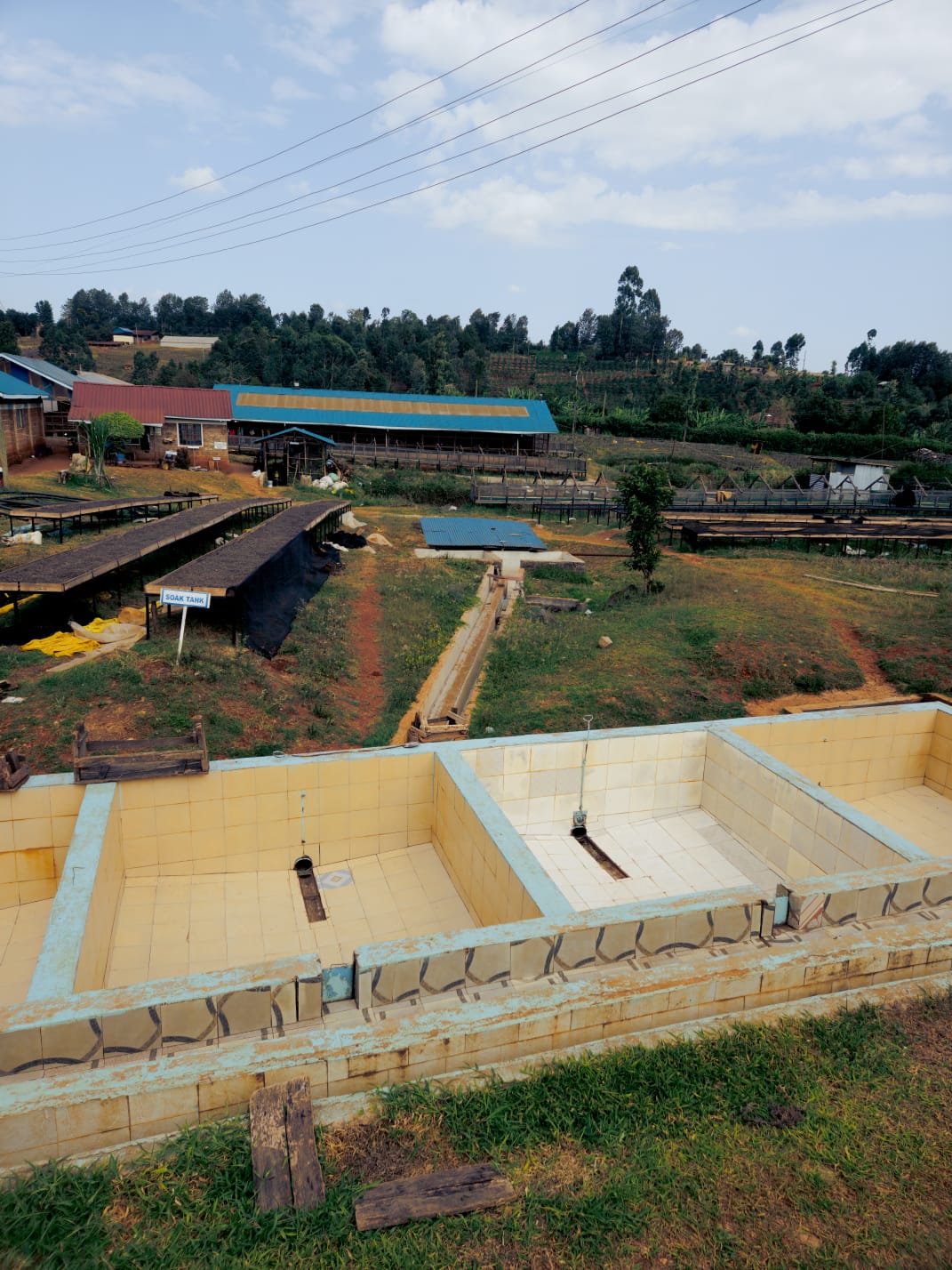
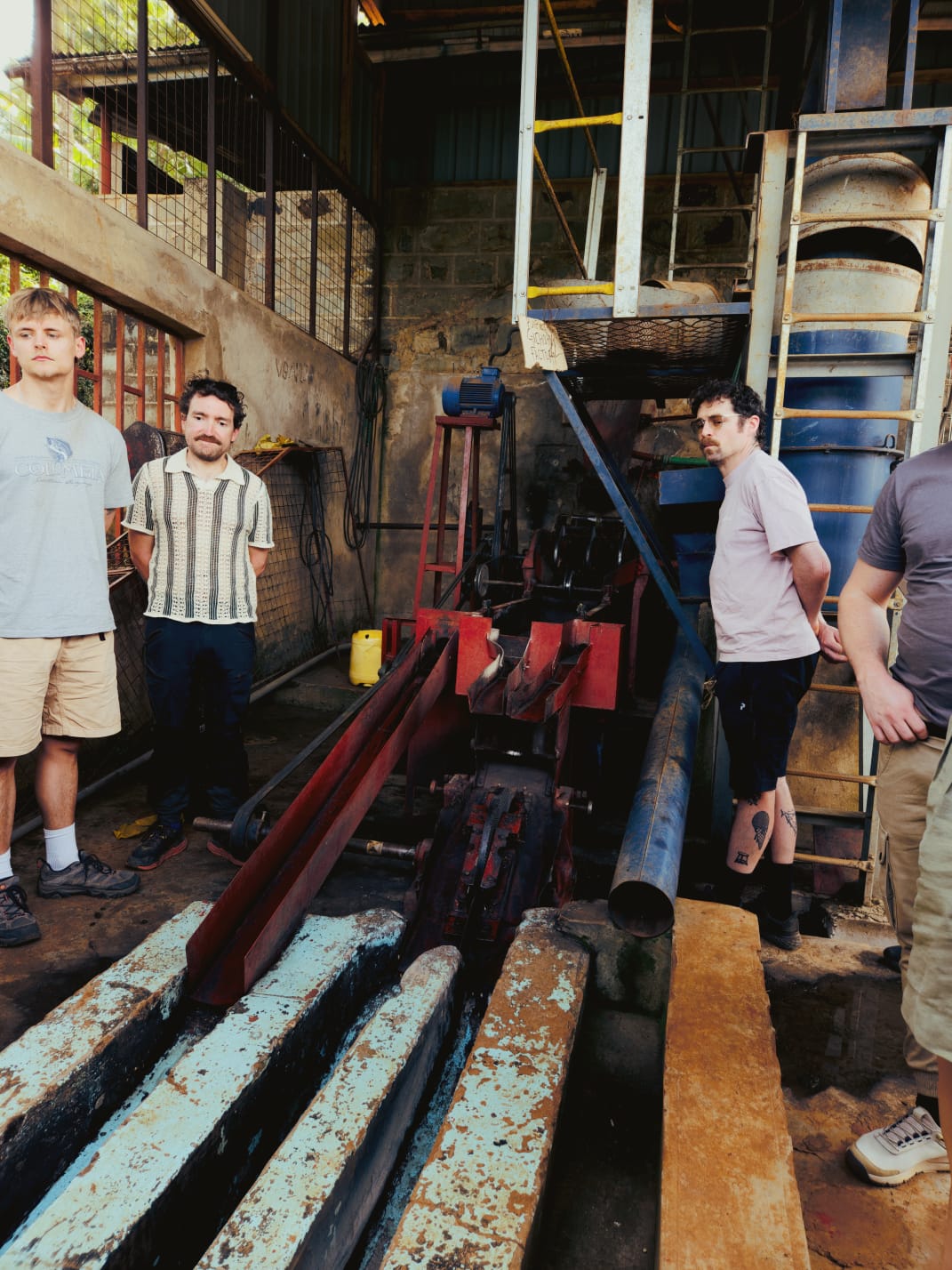
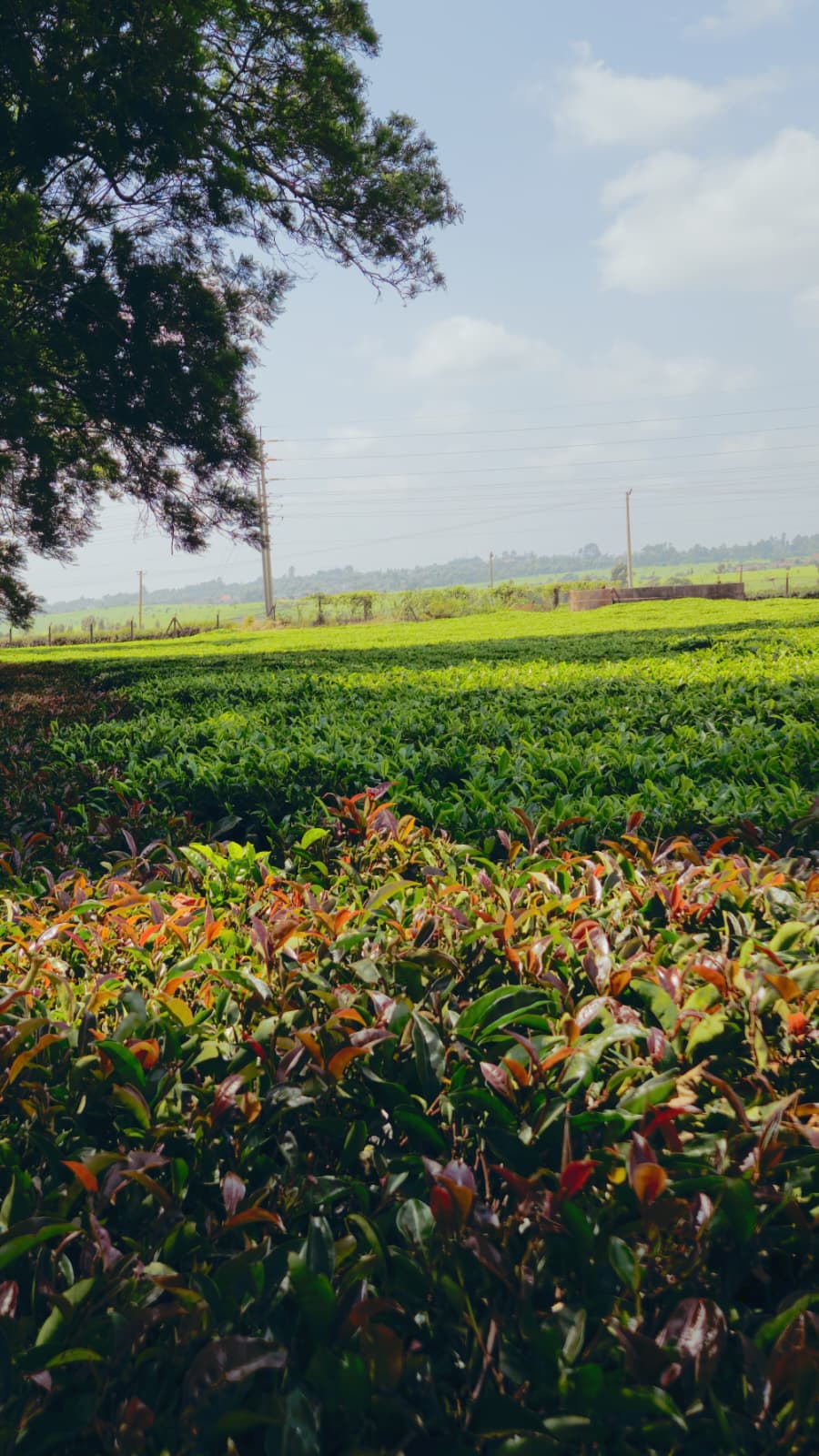
Mastery of Kenyan wet processing
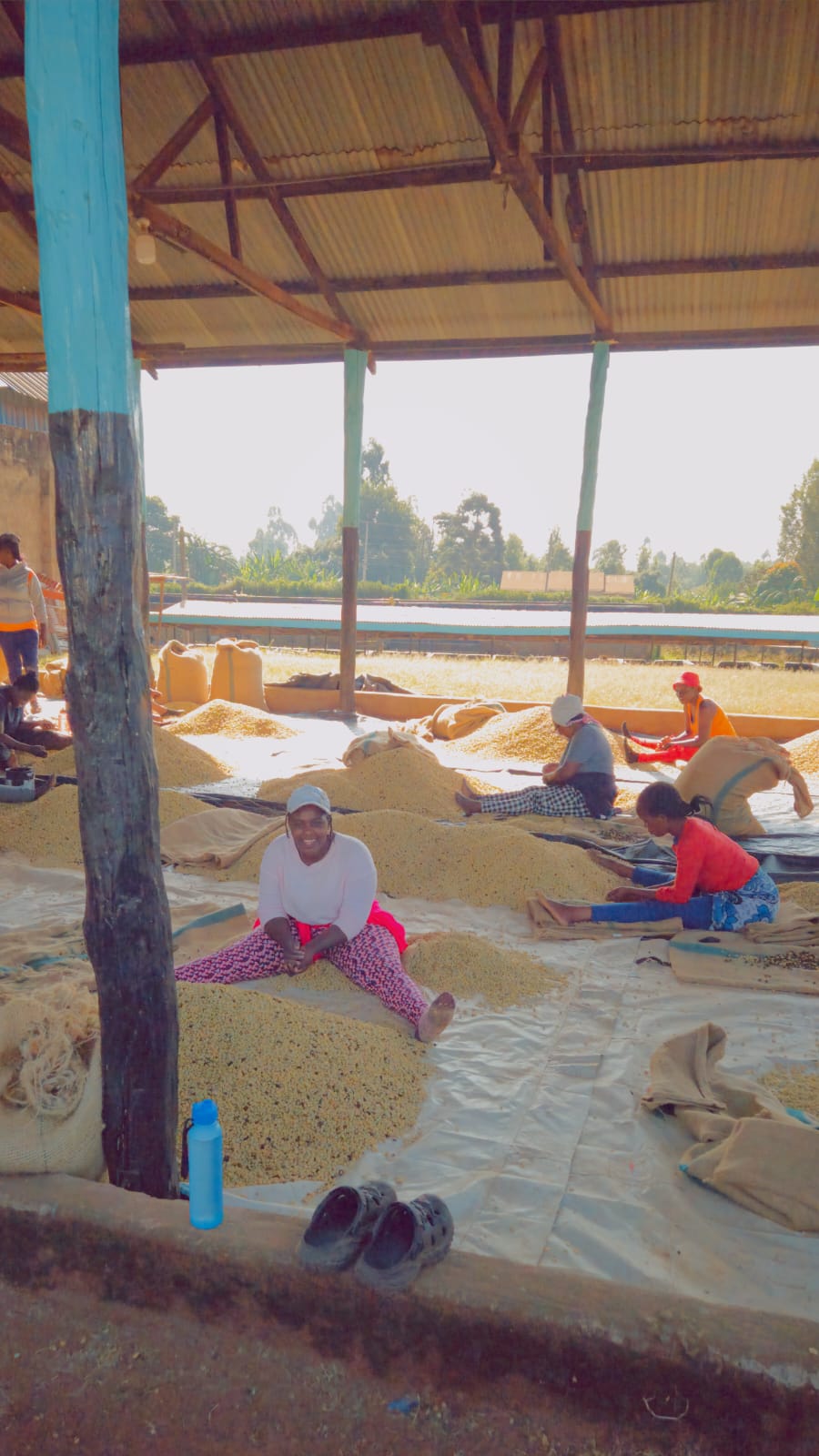
In Kenya, 99,9 % of the specialty coffee is processed by the wet method. Although we arrived at the very end of the season, we were able to see the precision of their processes.
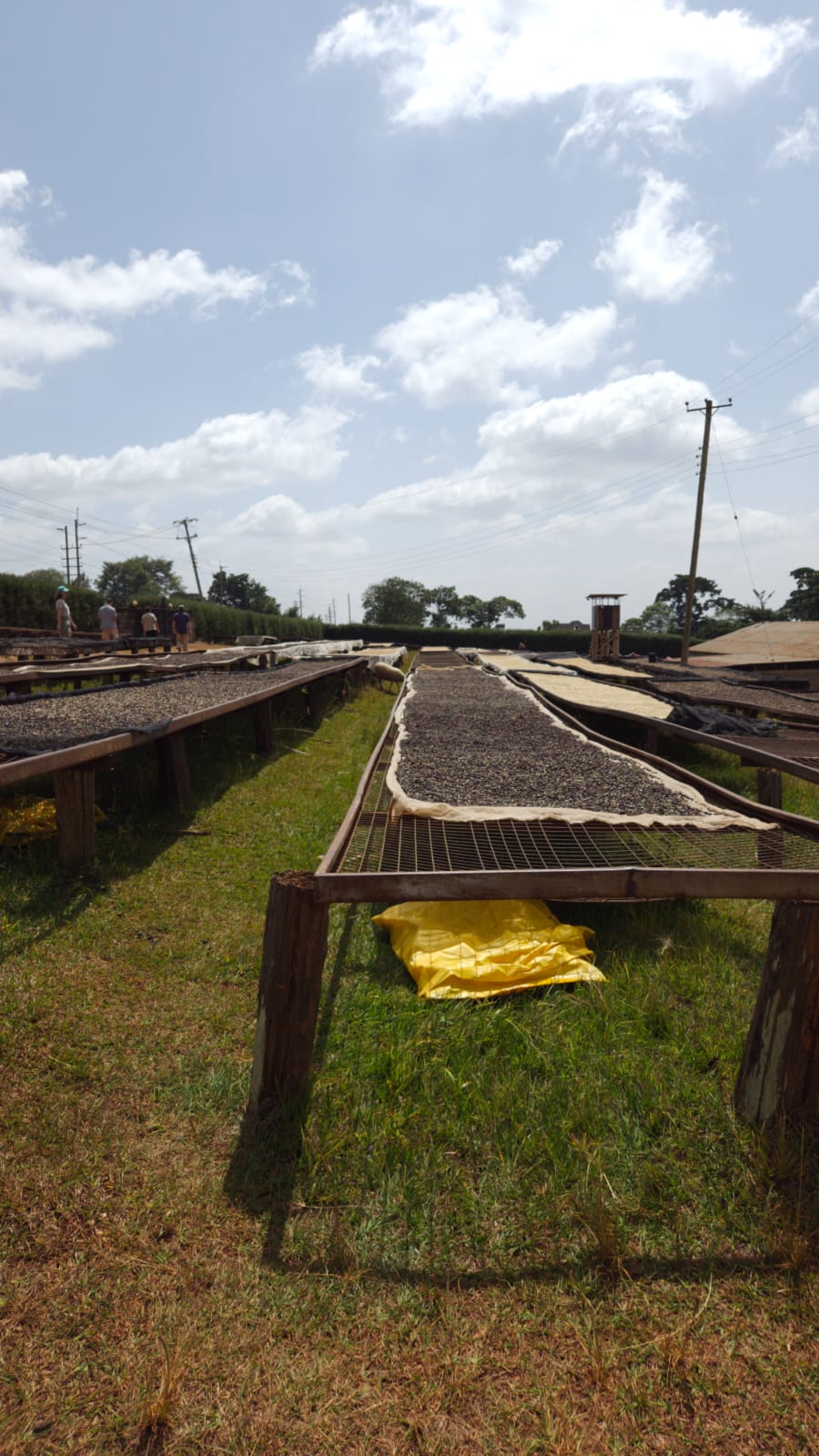
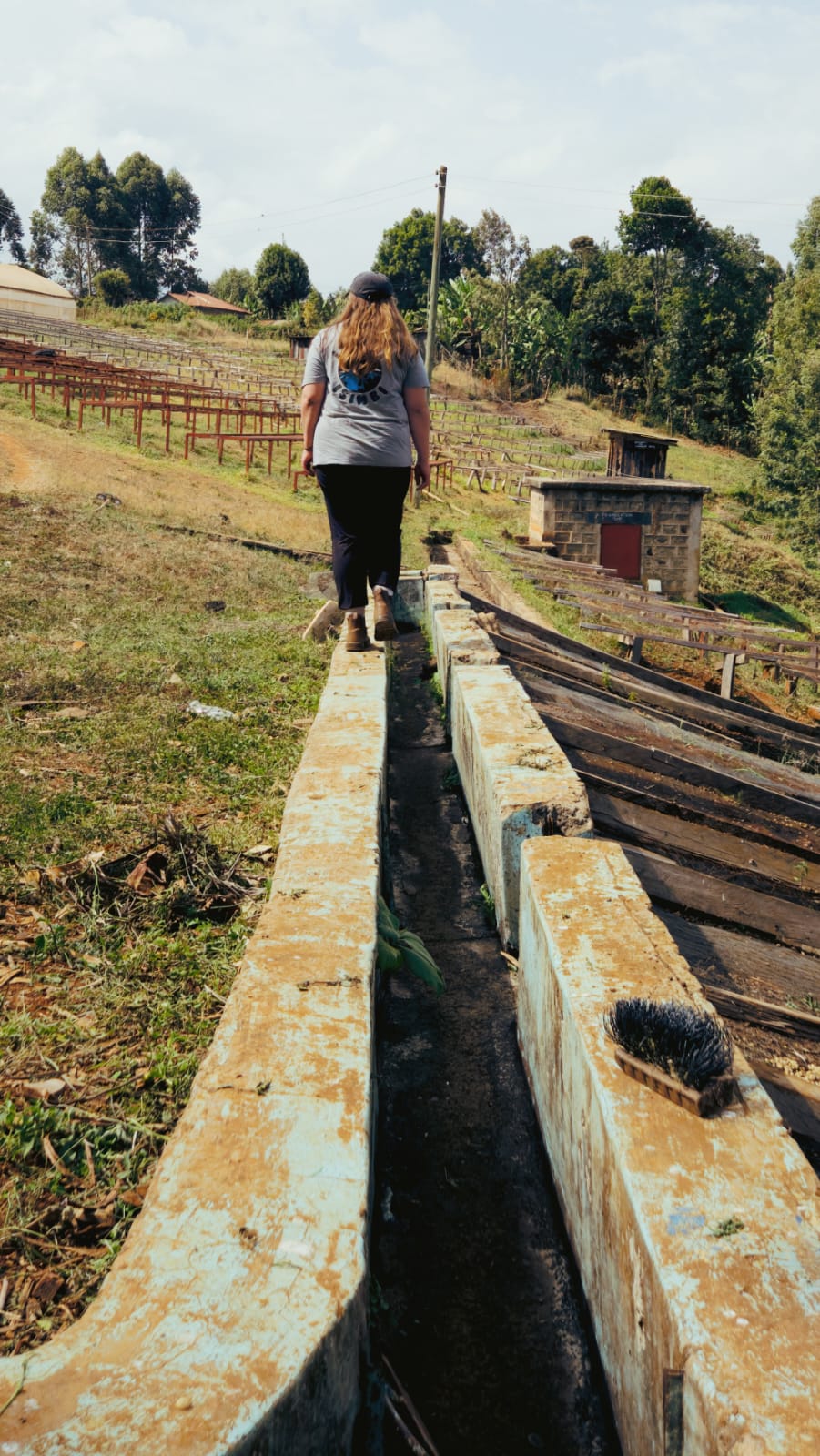
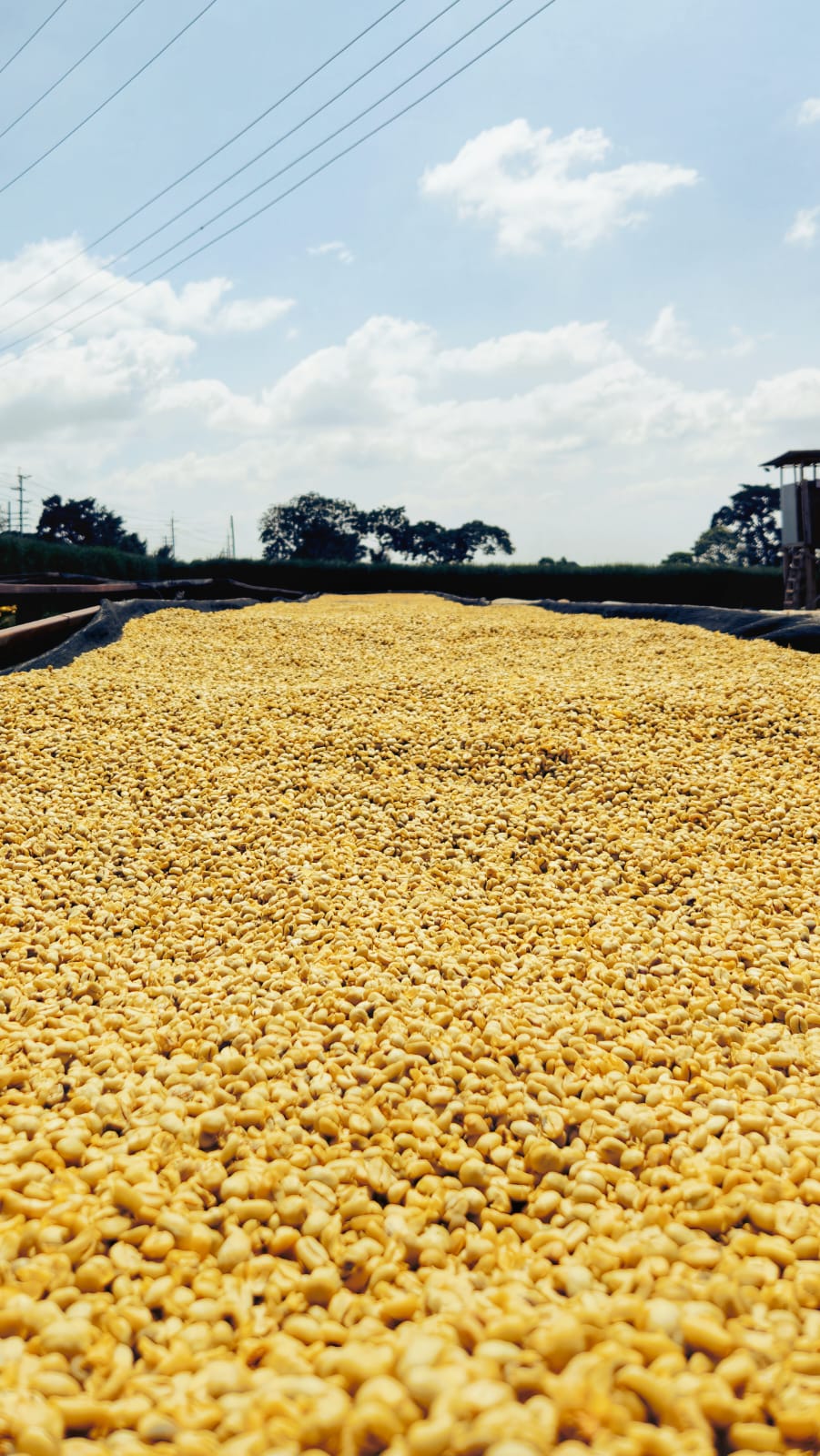
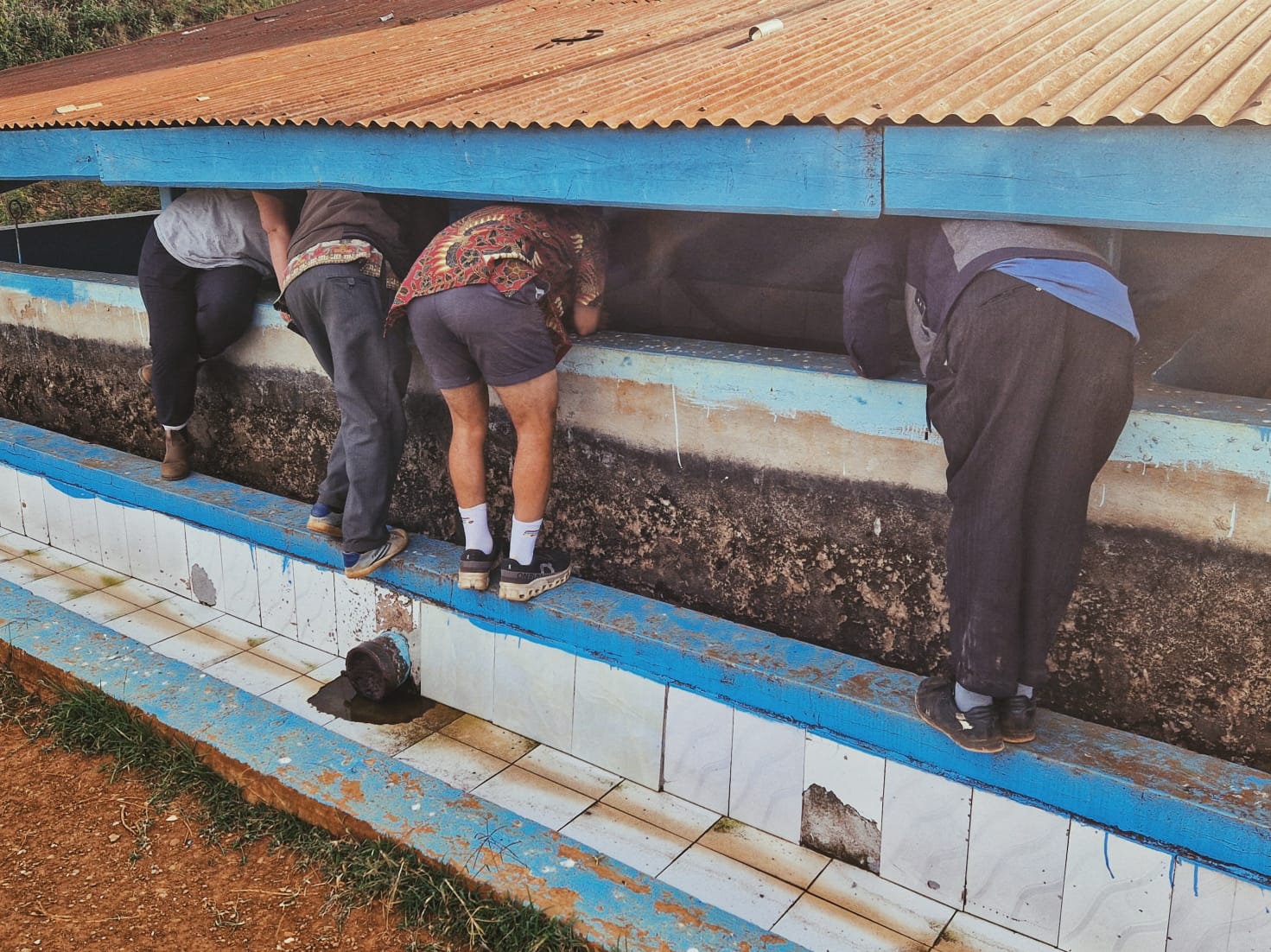
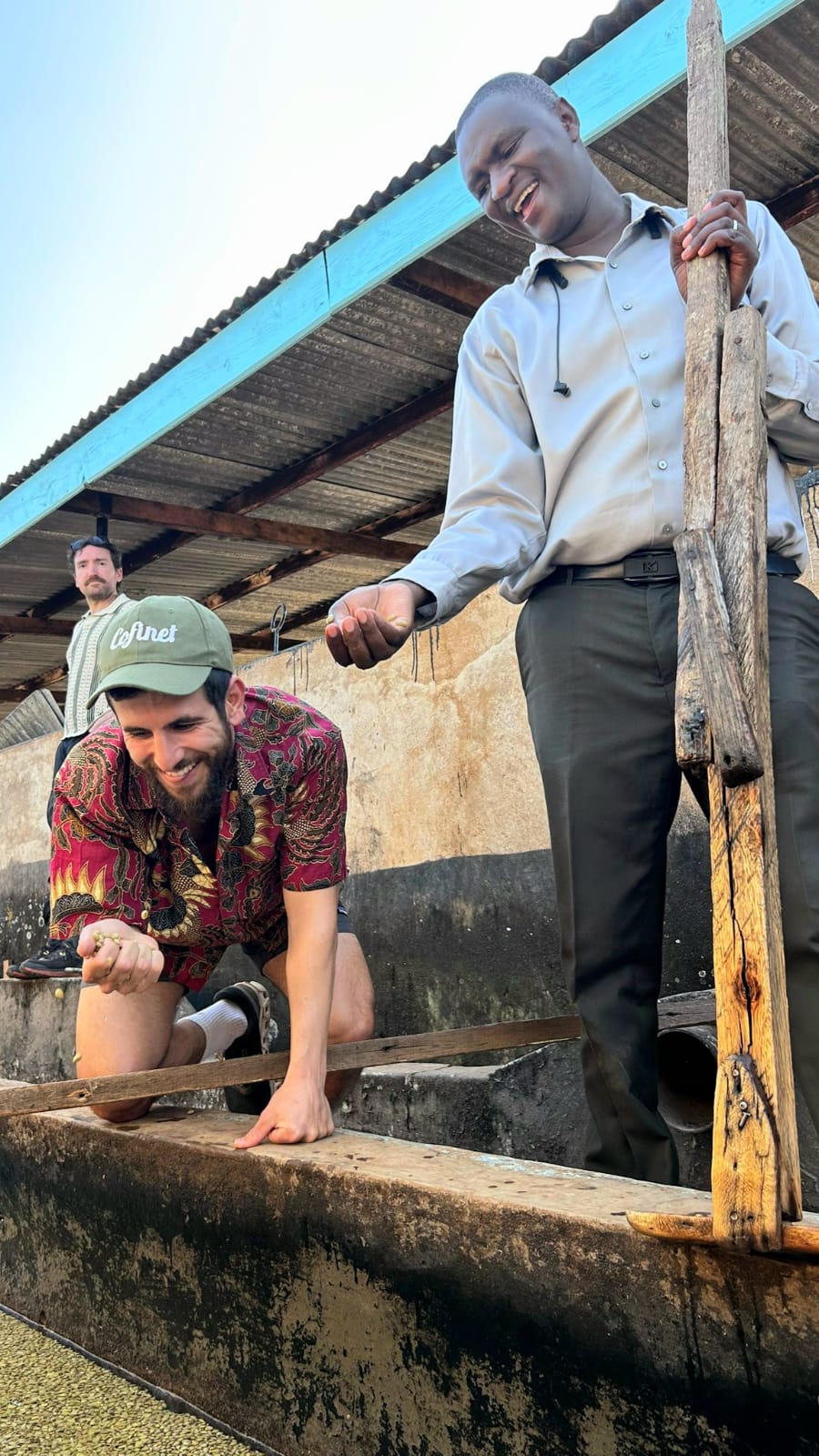
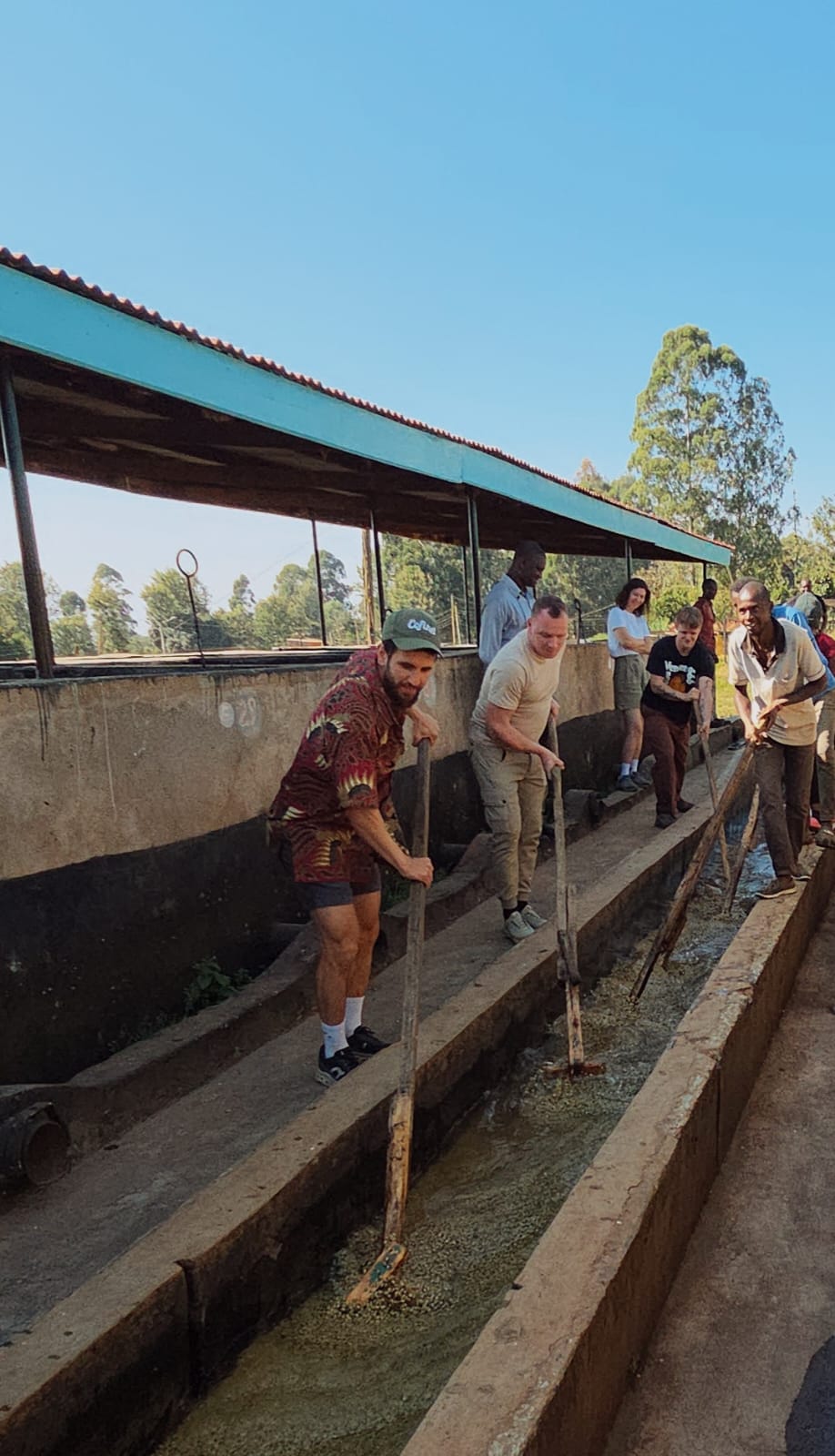
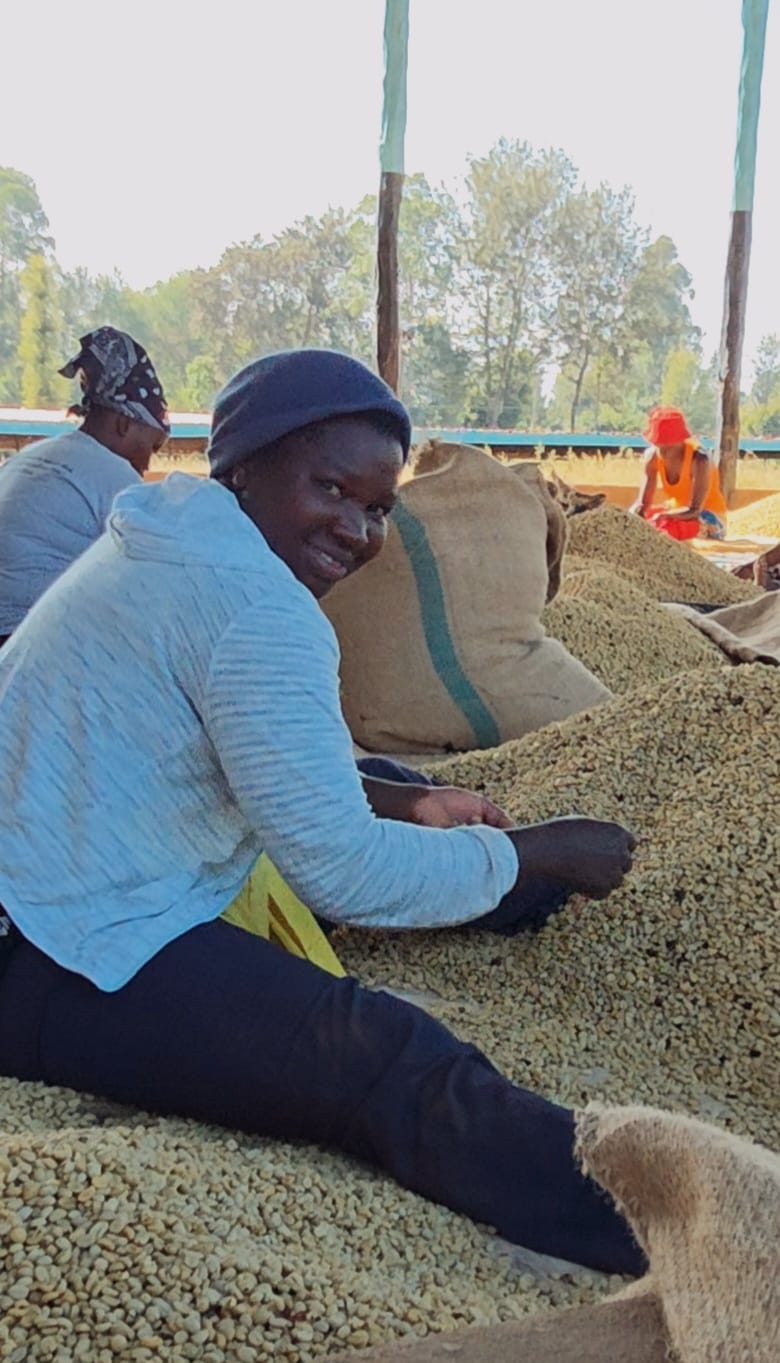
The process begins with de-peeling and fermentation, which takes 12-32 hours. This is followed by a wash and a second fermentation, sometimes under water, to stabilise the temperature and yeast activity. The whole process takes 2-3 days and each station has its own procedures. After drying on African beds, the coffee goes to the mill (dry milling) where samples are prepared for buyers like us.
The treatment of “Mbuni” is also interesting. These are unripe cherries that are harvested at the end of the season to prepare the trees for the following year. These are processed using the dry method and sold as lower quality coffee.
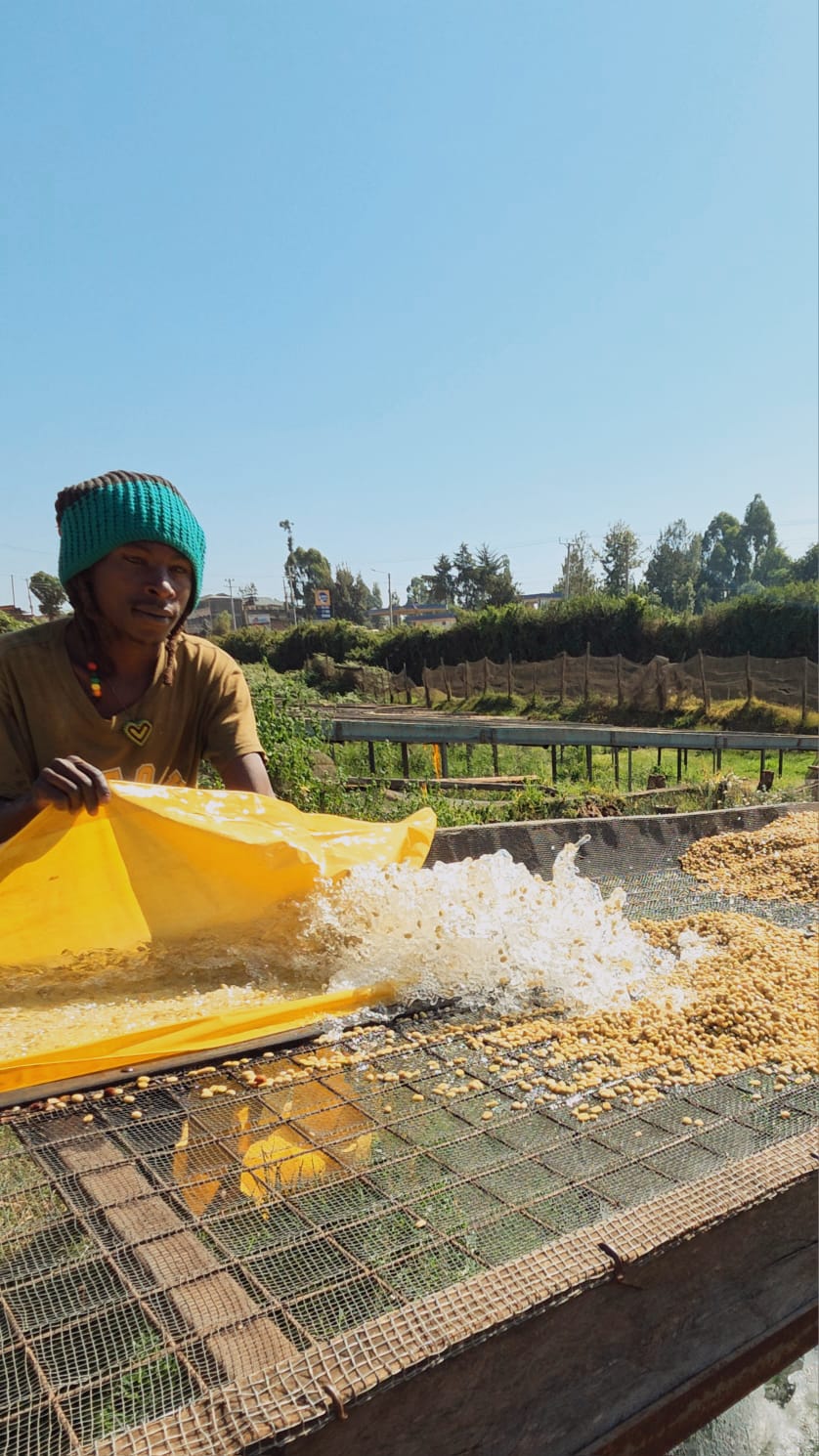
Success in Kagumo station
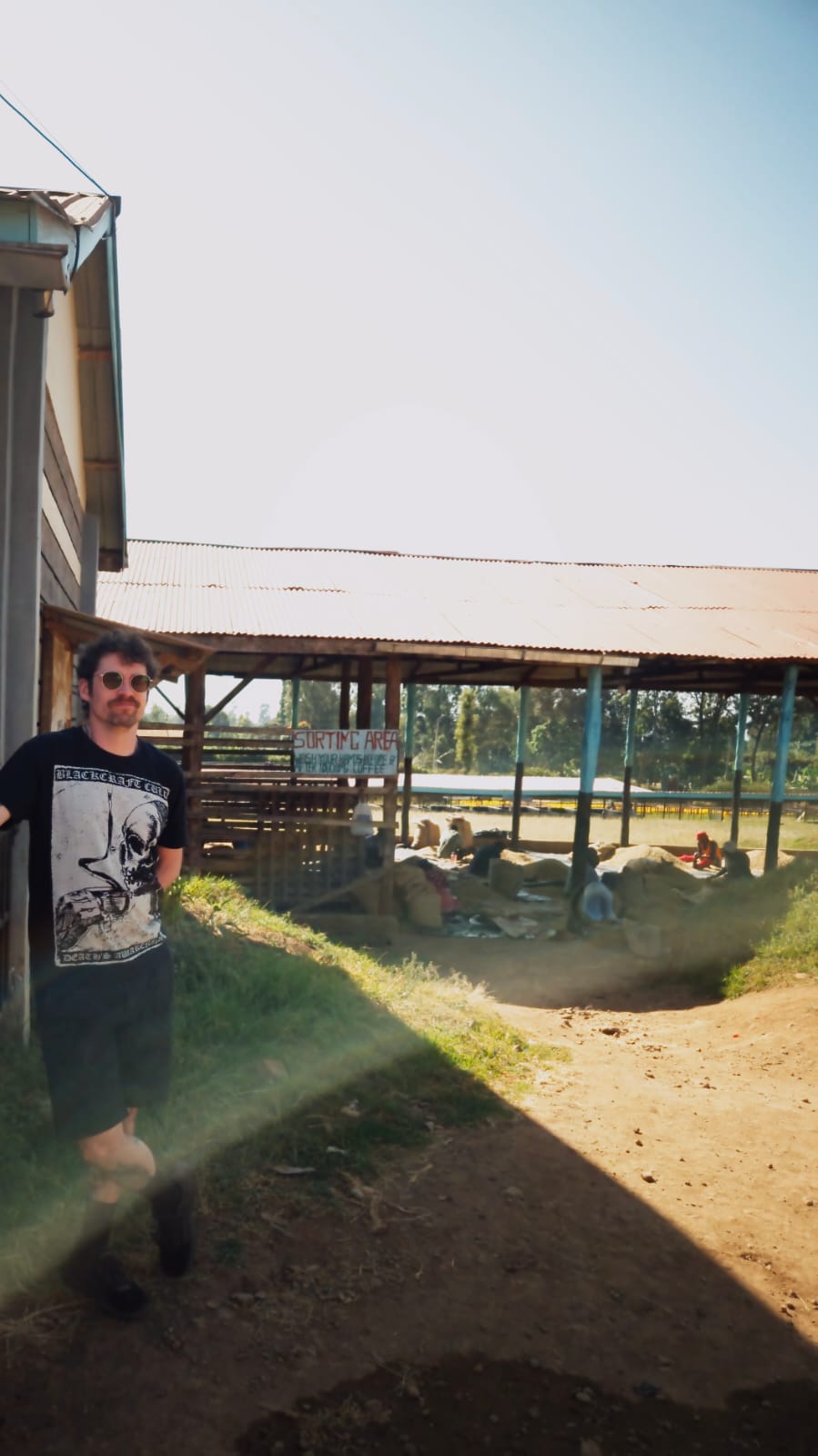
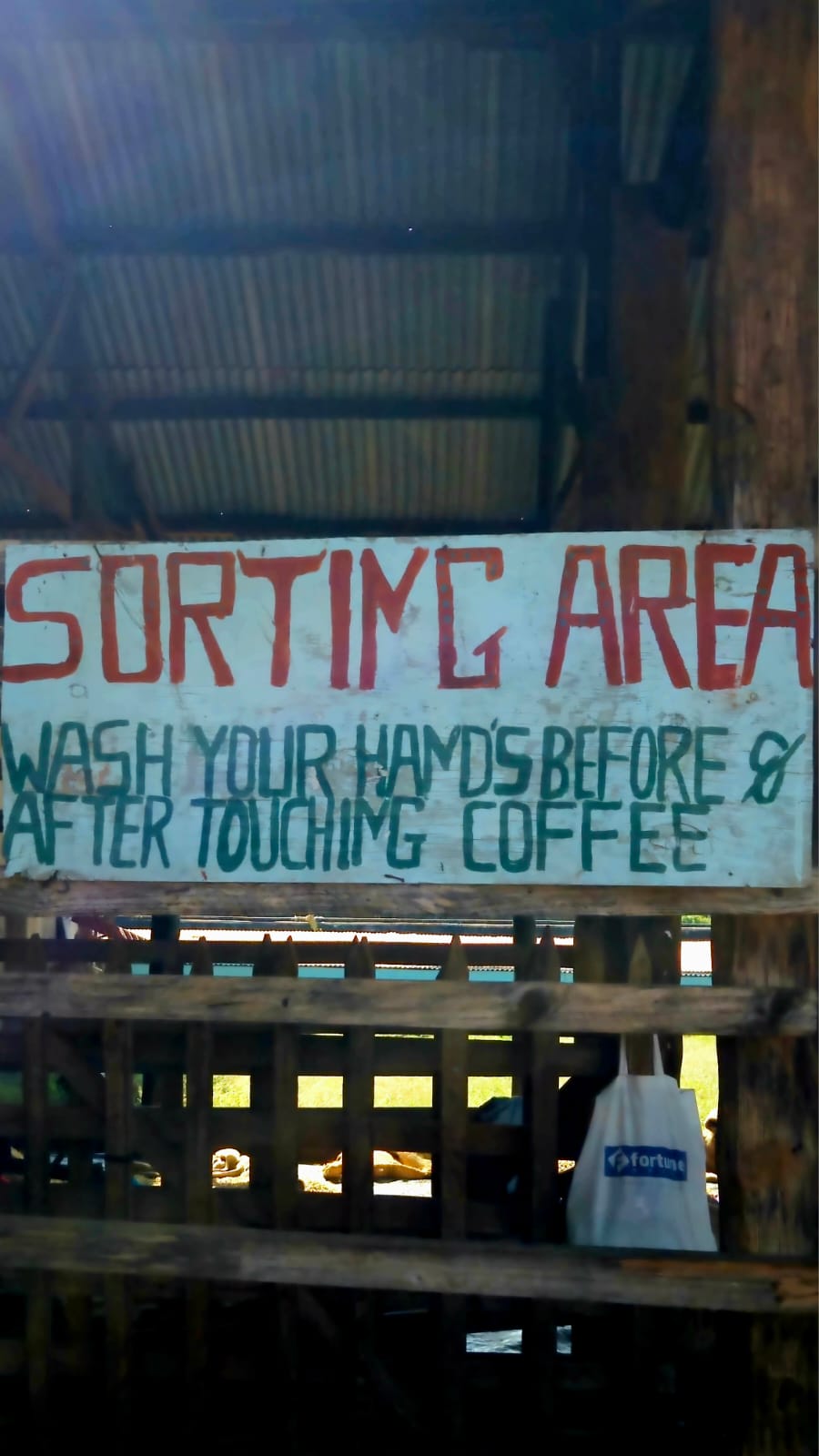
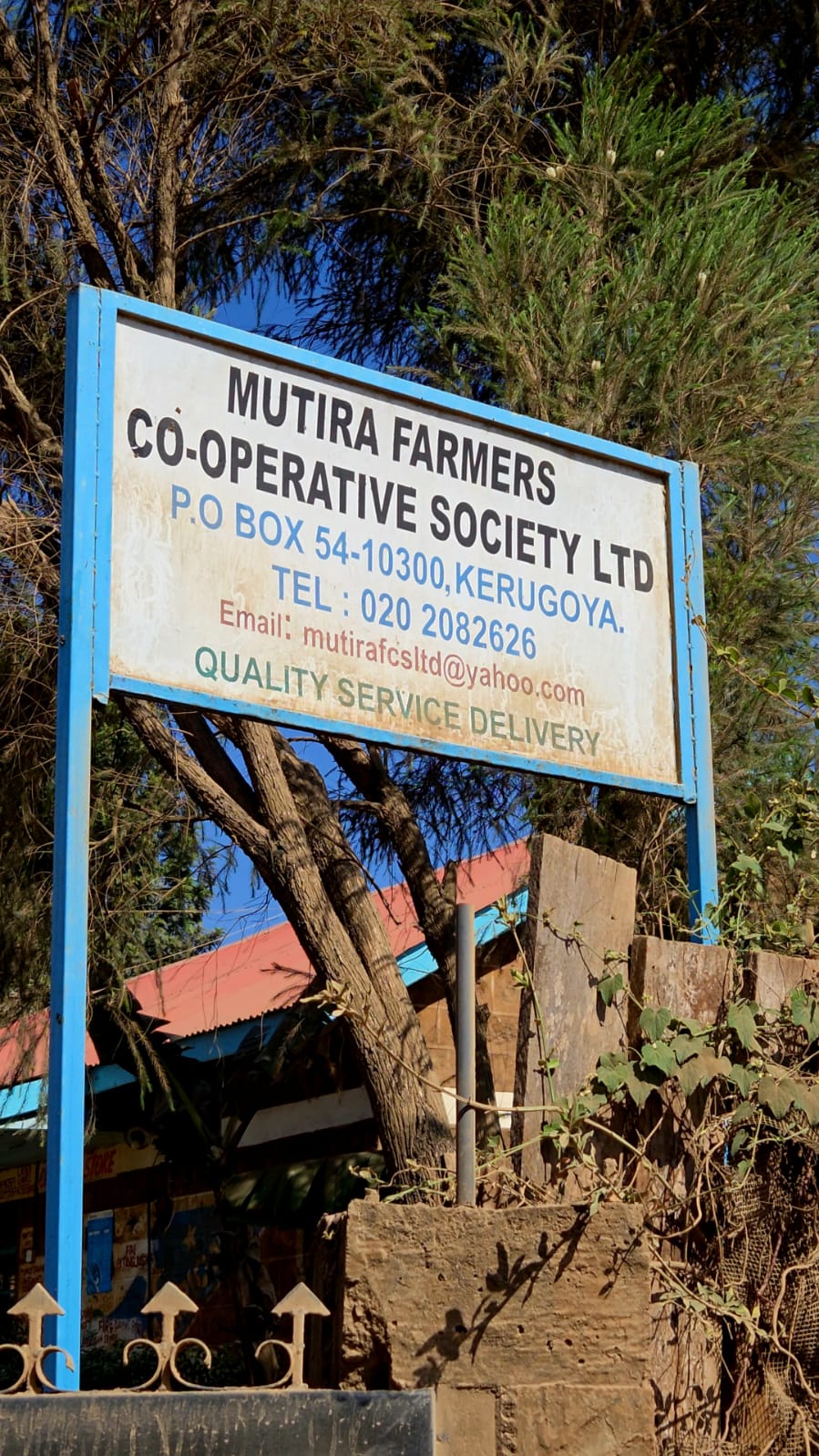
We are very happy to visit Kagumo station, which belongs to the Mutira cooperation. This cooperative brings together 8,000 coffee growers. It was at Kagumo that we saw the processing in action and managed to buy their coffee, which you will soon be able to taste as well.
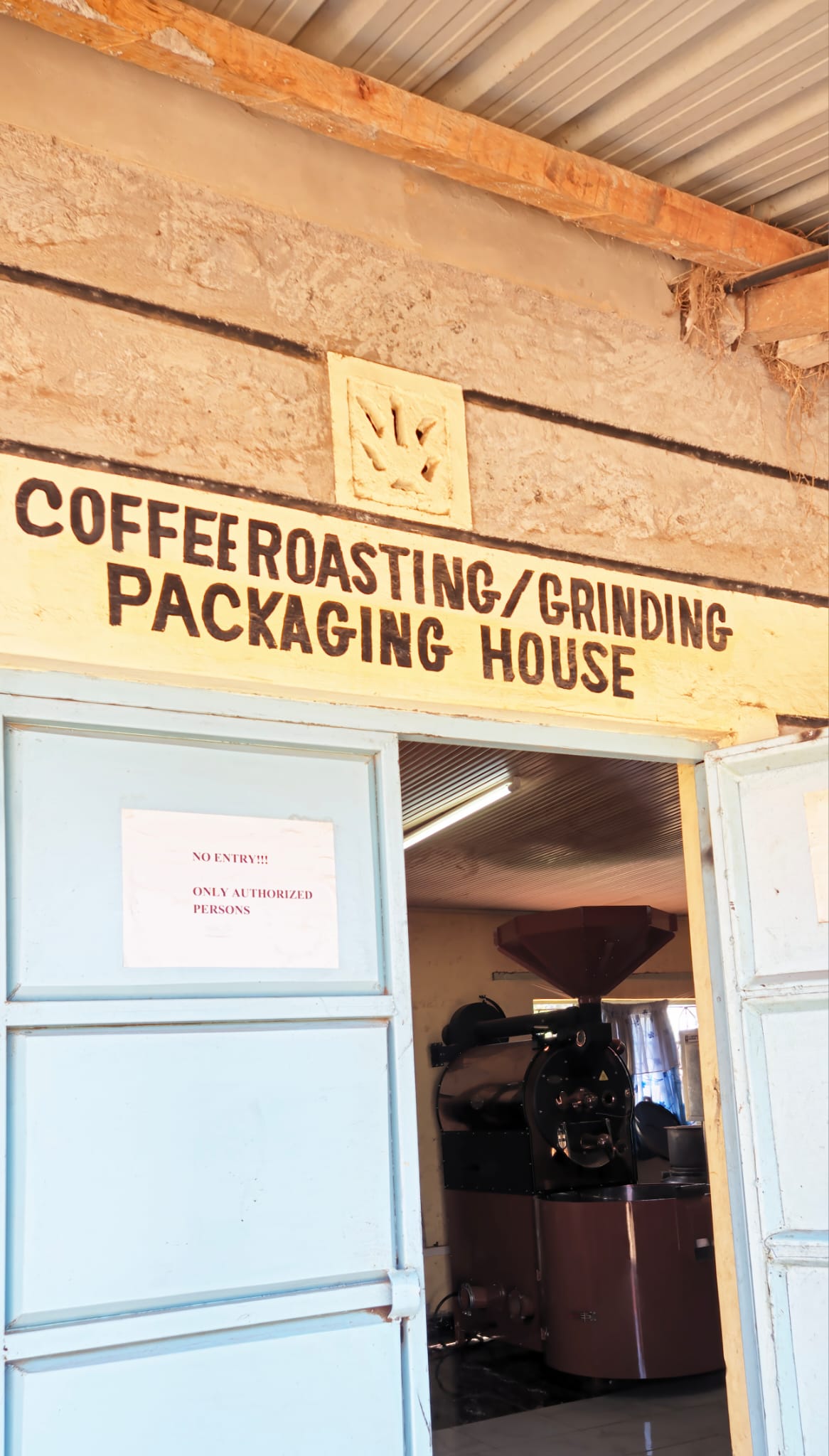
Kagumo impressed us with its emphasis on development – it is one of the few stations with its own roastery. The positive energy and quality we saw there made us confident that we had made the right choice. The specialty was also the honey from the coffee tree flowers, which we unfortunately couldn’t not buy.
What awaits us in the coming year
The last cupping before departure confirmed our favourites. The selection for this year will be excellent. We want to thank the Sucafina team for their expert care and great work in the field. Partnerships like this allow us at Goriffee to increase quality over the long term and bring you coffees with clear origins and stories.