Looking for an answer to the question, which coffee is the best? The answer is twofold: objective quality, measured by experts, and subjective taste, which depends on your preferences. To get your bearings, you need to understand what the term ‘Specialty coffee’ means in the coffee world.
What is the best coffee in terms of quality
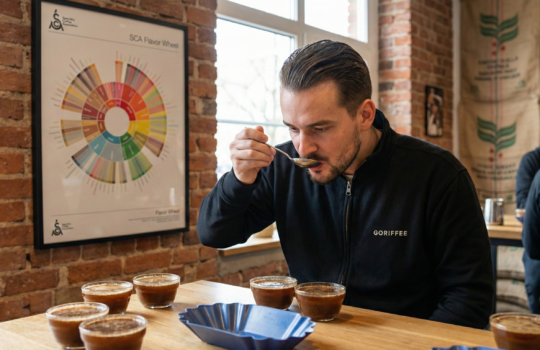
The best coffee in the world is not a marketing term, but a measurable figure. Professional tasters (Q-Graders) rate coffee beans on a scale of 0 to 100 according to Specialty Coffee Association (SCA) protocol.
To qualify as a specialty coffee, a coffee must score a minimum of 80 points. These beans account for approximately 5 to 10 % of world production. They are assessed for aroma, acidity, body, balance and purity of taste. If you’re looking for the real deal, always choose beans with high SCA scores and clearly declared origins.
Myths about the best coffee: price is not everything
There is a myth in the coffee world that the best coffee is necessarily the most expensive. Although price often reflects the cost of growing, harvesting and processing quality, it is not the only rule.
A typical example is Kopi Luwak (civet coffee). Although it is one of the most expensive in the world, you will never find it in our offer. The reasons are both ethical and qualitative. The industrial production of this coffee is associated with cruel treatment of animals and often falls short of the quality of modern methods of processing Specialty coffee in terms of flavour profile. The high price in this case is the result of marketing and exoticism, not genuine flavour complexity.
View from the roasting plant
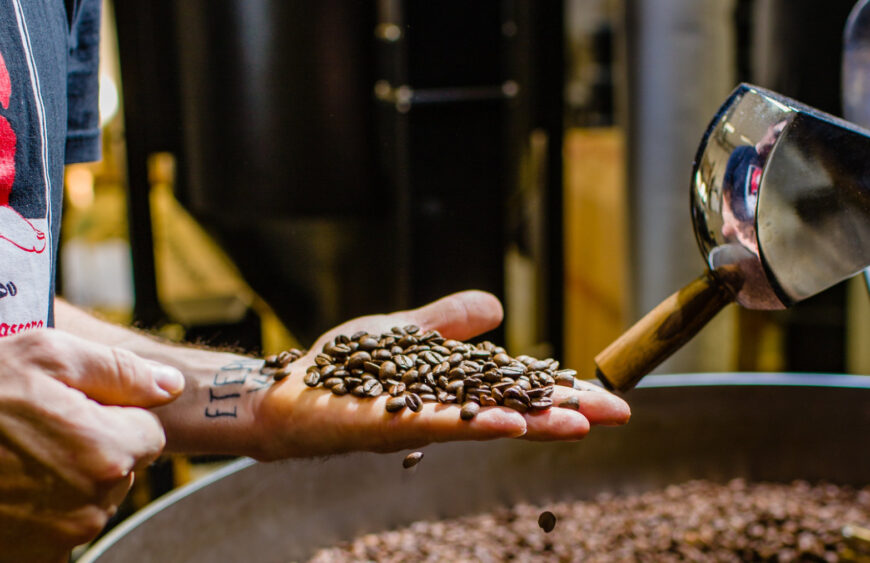
Although as experts we like to talk about points and flavour profiles, our roaster Jakub sees it from a practical point of view: ‘The best coffee for me is, of course, the one that is sold. But last year we had an exceptional Kenya Kiganjo PB and that was really the coffee of the year for me.”
How to know a top coffee by its packaging
When buying, focus on the key information that differentiates a quality production from a commercial one:
- Roasting date: Coffee is a fresh food. Coffee is a fresh food, usually having its best taste between two weeks and two months after roasting. After three months, it loses its delicate aromas.
- Specific location: the best coffees are not only marked by a country (e.g. Brazil), but by a specific region, farm or farmer’s name.
- Altitude: the higher the coffee grew (above 1200 m . m.), the slower it matured. The result is a denser grain and a more complex taste.
- Flavour profile: a quality roaster doesn’t state “strong” or “bitter”, but describes the notes you’ll naturally find in the coffee – like milk chocolate, forest fruits or jasmine.
What influences the resulting taste in your cup
Even the best beans won’t guarantee a great experience if the preparation fails. To get the most out of your coffee, follow these rules:
- Freshly ground beans: coffee starts to oxidize and lose its aroma just a few minutes after grinding. The grinder is the most important part of the equipment.
- Water quality: coffee is 98% water. Use filtered water so as not to obscure delicate tastes with minerals or chlorine.
- Correct temperature: Specialty coffee is never brewed with boiling water. The ideal temperature is between 92 and 96 degrees Celsius.
How we choose the best coffee for our customers at Goriffee
The path to the ideal cup begins with a rigorous selection process. Our team does not rely on chance, but on trained senses. For example, roaster Jakub is a member of our team and is the 2019 Slovak Coffee Tasting Champion.
The selection process includes:
- Thousands of samples: we regularly taste hundreds of samples sent to us by our suppliers, partners or directly by the farms.
- High pace: last year alone, we tested more than 2,500 different coffees, an average of 200 coffees per month.
- Professional cupping: every single sample is discussed in depth during cupping (professional tasting). Only the absolute best that has passed our strict quality sieve will then be offered to our customers.
The best or most popular coffees of our customers
If you don’t know where to start, here are four of Goriffee’s best-selling coffees that our customers repeatedly rank as the best.

Brazil Caramelo natural
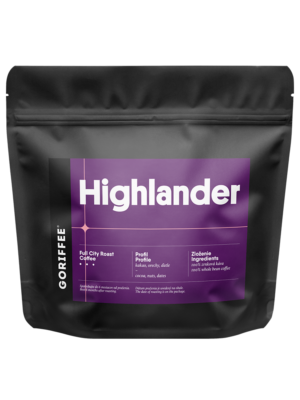
11,00 € – 42,00 €Highlander espresso blend
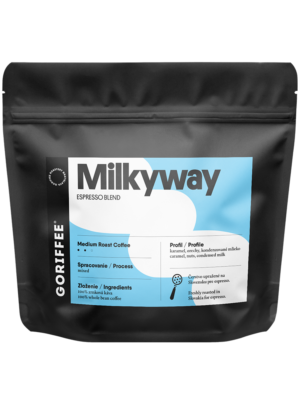
11,00 € – 42,00 €Milkyway espresso blend
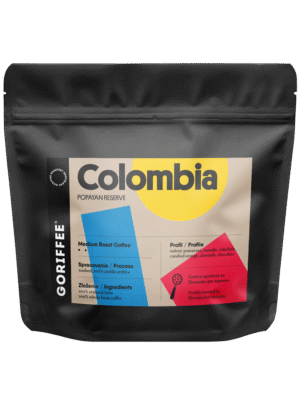
11,00 € – 42,00 €Colombia Popayan Reserve Washed
11,00 € – 42,00 €

Frequently Asked Questions (FAQ)
1. Is the world’s tastiest coffee the same for everyone? No. Taste is subjective. Someone prefers the sweet and earthy notes of South America, another seeks the fruity sparkle of Africa. Objectively, however, the best coffee is always that which is properly roasted and free from defects.
2. Why is Arabica considered better than Robusta? Arabica has more chromosomes and produces more complex tastes with higher sweetness and acidity. Robusta is hardier and cheaper, but tends to be flat and bitter in taste.
3. How do I know if the coffee is really fresh? Apart from the date on the packaging, you will know when you prepare it. Freshness is recognised during preparation through the so-called blooming of the coffee. However, it is important to know that even completely fresh coffee (a few days after roasting) is not ideal because it contains too many gases that prevent proper extraction. The tastes of specialty coffee usually peak between 3 and 6 weeks after roasting.
4. Does altitude affect quality? Yeah. At higher altitudes, there is less oxygen and cooler weather, which makes coffee cherries take longer to ripen. This allows the bean to absorb more nutrients and develop a richer profile.
5. Is it worth buying coffee in supermarkets? Most coffees in supermarkets are commodity coffees roasted in large volumes with the emphasis on long shelf life, not taste. If you’re looking for real quality, focus on local roasters of Specialty coffee.